In this guide
- The key points
- What Brussels I recast actually says
- The European Account Preservation Order
- What this means in practice
- What Cyprus still does well
- How enforcement of an EU judgment works, step by step
- A timeline: your window to build
- Non-EU judgments
- Decision criteria: building your protection
- Common mistakes
- Implementation: building protection that holds
- Three cases
- How to do it right
- FAQ
- Next steps
- Sources
Status as of 21 October 2026: based on Regulation (EU) No 1215/2012 on jurisdiction and the recognition and enforcement of judgments in civil and commercial matters (Brussels I recast), in particular Articles 36, 39, 45 and 52 as quoted in the judgment of the Court of Justice of the EU in case C-568/20, Regulation (EU) No 655/2014 establishing a European Account Preservation Order, and the Cyprus International Trusts Law 69(I)/1992 as amended in 2012. This guide explains the law in general terms; it is not legal advice for a specific dispute.
The phone rings at 7 a.m. A former partner, a creditor, a lawyer you've never heard of. By evening your account is frozen, and everything you spent two decades building suddenly has a new "claimant". The state doesn't defend you. The state hands the other side its stamp.
Now imagine the version where that call no longer scares you. You live in Limassol, the terrace faces the sea, and your family's wealth has sat for years in a Cyprus trust built in time, for real reasons, documented by the book. The claim arrives and meets a structure built in time, with the burden of proof on the creditor, not on you. It isn't magic. It's the right order, and the law respects it. Once, only great fortunes had this. Now you can, through ENCC.
The moment someone has a claim against you, a former partner, a creditor, a lawsuit you never saw coming, everything held in your own name becomes a target. Moving to Cyprus does not change that by itself. The system is built so that a creditor with a judgment from another EU country can reach a Cypriot account without a new trial. They do not need to beat you on the island. The paperwork travels for them.
That is the bad news, and we put it first because it is the reason to act. The good news is that Cyprus still gives you real tools: a modern legal system based on English common law, a trust law that is among the stronger ones in the EU, and professionals who know how to use it. People who use those tools early, for legitimate reasons, end up with protection that holds when it is tested. People who wait until the claim is filed end up with nothing.
This guide shows exactly where the gap is, under the EU rules on enforcing judgments and freezing accounts, and how to close it: what Cyprus still does well, the timeline that keeps your planning on solid ground, and the steps to build protection for your family that holds.
The wealthy have always slept better for one simple reason: what they own does not all sit in their own name, exposed to the first person who sues. That kind of planning used to need a family office. Today an ordinary founder or family moving to Cyprus can build the same layer of protection, early, lawfully and at a sensible cost. We coordinate the process; licensed lawyers and trustees build it.
The key points
- The creditor's fast lane. Under Article 36 of Regulation 1215/2012 a judgment from one member state is recognised in the others without any special procedure; under Article 39 it is enforceable without a declaration of enforceability; under Article 52 its substance is never reviewed. Know this, and you know why timing is everything.
- Narrow exits. Article 45 lists limited refusal grounds, such as manifest conflict with public policy or a default judgment where the defendant was not properly served in time.
- Accounts can be frozen across borders. Regulation 655/2014 lets a creditor obtain a European Account Preservation Order in cross-border cases, without warning the debtor first.
- The legal shield that does work. The Cyprus International Trusts Law sets a narrow test: a trust is set aside only where a creditor owed at the time of the transfer proves intent to defraud, and must act within two years of the transfer. Settle early, from surplus, run it properly, and you are using one of the stronger trust laws in the EU.
What Brussels I recast actually says
Know the rule your opponent uses, and you've already won half the game. Here's exactly how EU judgments travel, so your structure is ready before they do.
First, see the field the way a creditor's lawyer sees it, because that is how you build a structure they cannot touch. Regulation 1215/2012 applies to civil and commercial matters, broadly contracts, torts, company disputes and most commercial claims. It has applied to proceedings started from 10 January 2015 and replaced Regulation 44/2001, which already provided for recognition but required a declaration of enforceability, often called exequatur.
The recast removed that step. In the words of Article 39, a judgment enforceable in its member state of origin shall be enforceable in the other member states without any declaration of enforceability being required. The creditor presents the judgment and a standard certificate from the court of origin to the enforcement authorities where the assets are. The debtor can apply for refusal of enforcement, only on the grounds the regulation allows.
Those grounds are in Article 45, which applies to refusal of recognition and, through Article 46, to enforcement:
- recognition would be manifestly contrary to public policy in the member state addressed;
- a default judgment where the defendant was not served with the document instituting the proceedings in sufficient time and in a way that allowed a defence, unless the defendant failed to challenge it when possible;
- irreconcilability with a judgment between the same parties in the member state addressed, or with an earlier qualifying judgment from another state;
- conflict with certain jurisdiction rules protecting policyholders, consumers, employees, and with exclusive jurisdiction rules.
The CJEU applies the public policy ground only in exceptional cases, and Article 52 bars any review of substance. Translation: once a judgment exists, the game is over. The winning move is to be organised long before.
What sits outside its scope
The regulation excludes, among other things, revenue, customs and administrative matters, the status and capacity of natural persons, matrimonial property, wills and succession, insolvency, social security and arbitration. Those areas have their own rules, such as the Insolvency and Succession Regulations. Tax claims are outside Regulation 1215/2012, but member states assist each other with tax recovery under Directive 2010/24/EU, so a tax debt left at home can follow its debtor to Cyprus. Clean exit, then build: that is the order we work in.
Until now, only the rich had people who did this for them. Now you do: book your consultation.
The European Account Preservation Order
The gain of knowing this: you build before anyone can freeze anything. Here's the tool creditors use, and why timing beats it.
Regulation 655/2014 adds a second tool. In a cross-border case, a creditor with a judgment, or still pursuing a claim, can apply for a European Account Preservation Order that freezes funds in the debtor's accounts in another member state, designed to work without warning the debtor. With a judgment in hand, the creditor can also ask the court to obtain information about the debtor's accounts through the authorities where they are believed to be.
Denmark does not take part, and the creditor must show a real risk that enforcement would otherwise be impeded or made substantially more difficult. The practical lesson: cash moved after a dispute starts is not protected. Assets placed in a properly settled structure years earlier are a different story, and that is the story we help you write.
This is exactly what we set up for you, in the right order. Let's start yours.
What this means in practice
Here's the trick in one line: debts travel with you, so you leave clean and build early.
Your debts travel with you, so leave clean
A person who moves to Cyprus while a dispute is pending at home remains bound by the outcome, and the judgment can be enforced against Cypriot assets without a new trial; Cypriot courts apply Article 39 in exactly these terms. Settle what is open, then start fresh.
Timing is the shield
If a claim is foreseeable or pending, a transfer to Cyprus, a Cyprus company or a Cyprus trust is likely to be challenged, possibly at home as a transaction to defeat creditors, with the judgment enforced in Cyprus. Under section 3 of the Cyprus International Trusts Law, a trust is set aside only where a creditor owed at the time of transfer proves intent to defraud, within two years of the transfer. That test is strong for a trust settled early; it does not stop another EU court ruling on a late transfer under its own law. Early beats clever, every time.
The same rules everywhere in the EU, so pick the best toolkit
None of this is particular to Cyprus: a German judgment is equally enforceable in Austria, Portugal or Malta. No member state hides assets from an EU judgment. What differs is the quality of the tools for planning ahead, and there Cyprus is strong.
Imagine it done a year from now. Take the first step today.
What Cyprus still does well
Now the good part: what Cyprus gives you, and gives you well. English-based common law, one of the strongest trust laws in the EU, and professionals who know how to use it.
Now the part that makes people move here. Cyprus remains one of the better places in the EU to build long-term protection for a family, done early and for the right reasons.
The Cyprus international trust
The Cyprus International Trusts Law 69(I)/1992, substantially amended in 2012, gives you a modern framework: a trust under Cyprus law, a Cyprus-resident trustee, confidentiality obligations and rules on which law governs questions about the trust. Settled long before any claim is foreseeable, funded with assets you can afford to part with and run by a licensed trustee who takes real decisions, it separates legal ownership from your personal estate, gives the family governance and survives illness, death or a business failure. Our guide to the Cyprus international trust in the year of the move explains why the move is often the perfect moment.
Structure and separation
A properly run Cyprus company with its own governance separates business risk from personal wealth: a business that fails does not take the family home with it, as long as formalities are respected, capital is adequate and the company account is not a personal wallet.
Insurance and contracts
The quiet half of protection: professional liability and D&O insurance, contracts with limitation-of-liability clauses, clear separation of roles. We put these in place alongside the structure.
Privacy, lawfully
Cyprus keeps beneficial ownership registers in line with EU rules, and access by the general public has been restricted since the CJEU's 2022 ruling on public access. Not secrecy from authorities, banks or courts; real privacy from the curious, which is a legitimate interest. See asset protection and privacy.
The free people didn't wait for permission. Start with the Plan B form.
How enforcement of an EU judgment works, step by step
See the creditor's playbook step by step, and you'll see where real protection sits: in what you built beforehand.
It helps to see the process from the creditor's side, because that is how the debtor will experience it.
The creditor obtains a judgment. A court in another member state gives judgment in a civil or commercial matter. The judgment is enforceable in that member state, whether finally or provisionally.
The court of origin issues a certificate. On request, the court that gave the judgment issues a certificate in the standard form annexed to the regulation. It sets out the parties, the amounts and the fact that the judgment is enforceable where it was given.
The creditor goes to the enforcement authorities where the assets are. In Cyprus, that means applying to the competent court for enforcement measures against assets in Cyprus, with the judgment and the certificate, and a translation where required. No declaration of enforceability is needed first.
The debtor is served with the certificate. Before the first enforcement measure, the certificate must be served on the debtor, accompanied by the judgment if it has not already been served. This gives the debtor the chance to know what is coming.
The debtor may apply for refusal of enforcement. The application must rely on one of the grounds in Article 45. The court of the member state addressed cannot look again at whether the original court was right on the facts or the law.
Enforcement proceeds under local procedure. Seizure of movable property, garnishment of bank accounts, charges over land and the other measures available under Cyprus law apply in the ordinary way.
In practice, the weak point for a creditor is rarely the regulation. It is finding the assets. That is why the European Account Preservation Order's account information mechanism matters, and why banks, registers and the creditor's own investigations often decide how much is actually recovered.
For you, the takeaway is simple: a structure settled long before any claim, held in the right names and properly documented, is what changes this picture. That is what we build with you.
Until now, only the rich had people who did this for them. Now you do: book your consultation.
A timeline: your window to build
Your window is open right now, while nobody has a claim against you. That window is the shield. Here's how to use it.
The single biggest factor in asset protection is when it happens. Think of three zones.
- Long before any dispute: the green zone. No claims, none foreseeable, business solvent. You want to protect the family against future risks, organise succession, put governance around wealth for generations. Planning here is legitimate and effective: a trust or foundation settled now from surplus is hard to challenge later, because there was no creditor to defraud.
- When a dispute is foreseeable. A contract has gone wrong, a partner is unhappy, an authority is asking questions. Here we keep planning to what you would have done anyway, with a litigation lawyer at the table.
- After a claim is made. Now almost every significant transfer looks like an attempt to defeat it. The useful work is defending or settling well; the structure comes after.
The move to Cyprus, when you are reorganising your life anyway and nothing is pending, is often the green zone at its best. That is exactly when we want to talk to you.
This is exactly what we set up for you, in the right order. Let's start yours.
Non-EU judgments
The gain: a judgment from outside the EU doesn't get the fast lane. Here's how it works.
Judgments from outside the EU follow different rules. Whether and how a Cypriot court recognises a judgment from, say, the UK, the US or Switzerland depends on Cyprus law, any bilateral treaty and, for some countries, international conventions; the process is usually slower and more open to argument than under the EU regulation. Cypriot courts do recognise foreign judgments in appropriate cases, so the plan is the same: build early, build properly.
Imagine it done a year from now. Take the first step today.
Stop financing a state that treats you as a resource. Start building the life of the free people.
Is there still time to protect what you have?
Protection works only if it is built before it is needed. In a consultation we look at your situation, your timeline and your assets, and coordinate with licensed lawyers and trustees on the structure that fits.
I want my structure → Or start with the Plan B form
We coordinate; legal, trust and tax work is done by independent, licensed partners in their own name and under their own responsibility.
Decision criteria: building your protection
This is where you decide, and the decision is yours, not the state's. Run through these points and you'll know in ten minutes which structure fits your life.
When you talk to us about protection, we start with timing, then structures.
- Clear sky? No claim, none foreseeable: you are in the green zone. If something is open, a litigation lawyer handles it first and we build afterwards.
- Solvent after the transfer? Protection comes from surplus, never from money creditors are owed. That is what makes it hold.
- What is it for? Succession, family governance, protection against future business risk, wealth across borders: all legitimate purposes.
- Real decisions to a licensed trustee. That is what turns a trust into a shield.
- Where will you and your assets be? We plan from the facts of your life.
The free people didn't wait for permission. Start with the Plan B form.
Common mistakes
Every mistake below is a gift: someone else paid for it so you don't have to. Avoid them and your structure stands from day one.
- Treating any EU state as out of reach. EU civil and commercial judgments are enforced in Cyprus without a new trial. The protection is in the structure, not the address.
- Waiting for the letter. A structure set up after a claim is foreseeable invites a challenge. Build in the green zone.
- Keeping control while claiming separation. A trust where the settlor decides everything is a trust in name only.
- Moving cash to dodge a freezing order. The European Account Preservation Order exists for exactly that.
- Skipping insurance. For many professionals and directors it is the most effective layer there is.
- Nominees to obscure ownership. They do not work with banks or courts and create risks of their own. We do not use them.
Until now, only the rich had people who did this for them. Now you do: book your consultation.
Implementation: building protection that holds
Here's the playbook, step by step. Short, ordered, done with licensed partners. This is how the free people build it.
- Start clean. List liabilities, sureties and disputes; anything live gets solved first.
- Write down the purpose. Succession, governance, future business risk.
- Choose the vehicle with licensed advisers. A Cyprus international trust, a foundation elsewhere, a holding company, better insurance and contracts, often a combination.
- Fund it from surplus, with evidence of your solvency at the time.
- Respect the structure. The trustee decides, formalities are kept, decisions documented.
- Review regularly as family, business and law change.
This is exactly what we set up for you, in the right order. Let's start yours.
Three cases
Imagine yourself in one of these three stories. Real-world patterns, the right order, and what it gave each of them.
Dieter, Limassol: clean first, then build
Dieter moved to Limassol while a commercial lawsuit against him was pending in Germany. A friend suggested putting his savings into a Cyprus trust; his lawyer explained that the claim was known, the transfer would likely be challenged and a German judgment would be enforceable in Cyprus without a new trial. Dieter settled the claim. Two years later, sky clear, he set up a trust for his children.
Ana and Vlad, Nicosia: protecting the next venture
Ana and Vlad sold their software company and moved to Nicosia, planning a new, riskier business. With licensed advisers they placed part of the sale proceeds into a Cyprus international trust for their children while solvent and claim-free, and kept the rest. The new business runs through a separate, insured company. If it fails, the trust assets are not exposed to its creditors, settled years before and from surplus. That is the model.
Klaus, Paphos: why we start with a clean record
Klaus had an Austrian default judgment from ten years earlier that he thought had lapsed. When he opened an account in Cyprus, the creditor applied for enforcement. He argued he had never been properly served, one of the Article 45 grounds and a factual question for the court. His story is why every plan we coordinate starts with a full liabilities check.
Imagine it done a year from now. Take the first step today.
How to do it right
The trick isn't avoiding the rules. It's using them in the right order. Here's how we set it up right for you.
- Act while you have no claims. No disputes and none in sight is the best moment you will ever have. Every month of clean history works for you.
- Know which rules apply. EU civil and commercial judgments travel easily; tax, insolvency, family property and succession follow their own rules, and non-EU judgments depend on the country and any treaty. A licensed lawyer maps your exposure first.
- Use the right structure for the purpose. A Cyprus international trust, settled early and from surplus, combined with succession planning so protection and inheritance work together.
The free people didn't wait for permission. Start with the Plan B form.
FAQ
Does a German judgment need a new trial to be enforced in Cyprus?
No. Under Regulation 1215/2012 a judgment from another member state in a civil or commercial matter is recognised without any special procedure and enforceable without a declaration of enforceability, and its substance is not reviewed. That is why we plan early.
Can a Cypriot court refuse to enforce an EU judgment?
On the limited grounds in Article 45, such as manifest conflict with public policy, defective service in a default judgment, irreconcilable judgments or breach of certain protective jurisdiction rules. The debtor has to apply.
Can a Cyprus bank account be frozen by a foreign creditor?
In a cross-border case, yes, through a European Account Preservation Order under Regulation 655/2014, without prior notice. Assets in a structure settled years earlier are in a different position.
Does a Cyprus international trust protect against future creditors?
Settled in good time, from surplus and run properly, it can protect assets from the settlor's future creditors. Under section 3 of the Cyprus International Trusts Law it is set aside only where a creditor owed at the time of transfer proves intent to defraud, within two years.
Is Cyprus a good place for asset protection?
Yes, when it is done early. It applies the same EU rules as every member state, and its trust law is among the stronger ones in the EU.
What is the first step?
A timing check and a liabilities list. If the sky is clear, we can start building with licensed lawyers and trustees.
Next steps
You've seen how it works. Now it's your move.
For the trust itself, see the Cyprus international trust in the year of the move; for the bigger picture, asset protection and privacy and Cyprus company formation. Today's companion covers the Liechtenstein foundation and banking. All guides are on the English blog.
Stop financing a state that treats you as a resource. Start building the life of the free people.
Do not wait for the claim. Build the wall first.
Tell us what you want to protect and for whom. We review your options with you and connect you with licensed lawyers and trustees who can build protection that holds, lawfully and in good time.
I want my structure → Or start with the Plan B form
We coordinate; legal, trust and tax work is done by independent, licensed partners in their own name and under their own responsibility.
Sources
- Regulation (EU) No 1215/2012 (Brussels I recast), Articles 36, 39, 45, 46 and 52, as quoted in CJEU judgment C-568/20, J v H Limited, 7 April 2022: https://curia.europa.eu/juris/liste.jsf?num=C-568/20
- Regulation (EU) No 655/2014 establishing a European Account Preservation Order: https://e-justice.europa.eu/content_european_account_preservation_order-379-en.do
- Cyprus International Trusts Law 69(I)/1992 as amended: https://www.cylaw.org/nomoi/enop/non-ind/1992_1_69/full.html
Verified on 21 October 2026. EUR-Lex was not reachable from our checking tool; the article texts were verified through the official CJEU judgment that quotes them.
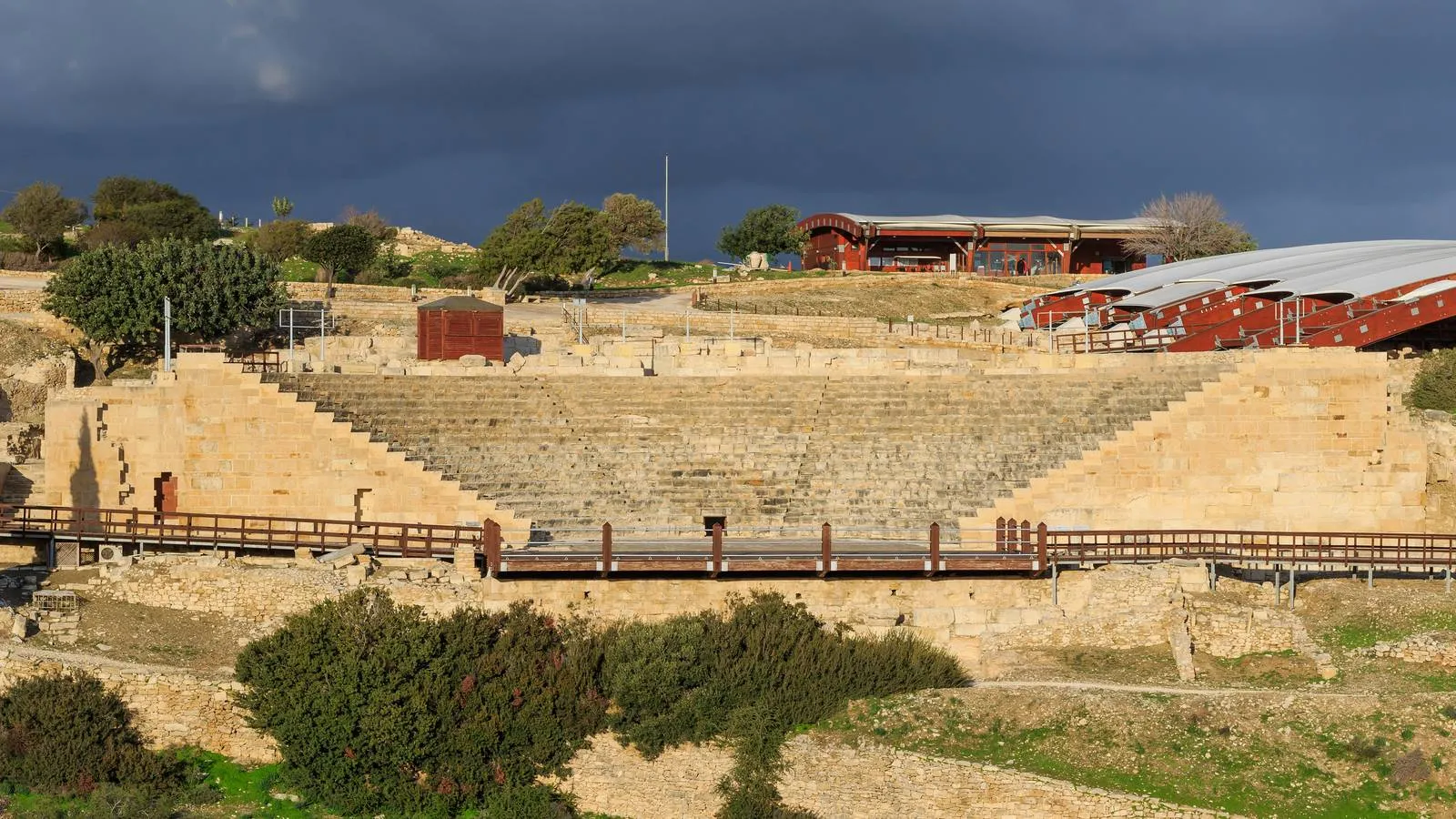
Cover photo: Kourion, Episkopi, Cyprus. Photo: A.Savin, Wikimedia Commons, Free Art License, cropped.