In this guide
- The key points
- Key terms, in plain words
- 90 days for the permit, 183 for the tax home
- Monaco: how residence works
- Monaco: what you pay, and what you do not
- Andorra: how residence works in 2026
- Andorra: what you pay
- Monaco and Andorra, side by side
- What your home state will ask
- How we do it: the sequence
- The most common errors
- Three illustrations
- The circle you join
- How it compares with Cyprus, and when it beats Cyprus
- FAQ
- Next steps
- Sources
You are standing on the harbour wall at Port Hercule. Behind you, the old town on its rock; in front of you, masts and quiet water. Someone at dinner last night told you the secret: "Ninety days a year, a lease, and you are a Monaco resident. No income tax." Two hours west by road and a mountain range away, someone else told you the same about Andorra: "Ninety days, a 10% top rate, done." Both sentences are half true. And the half that is missing is the half that decides whether your home country lets you go.
Now imagine getting it right. A residence card in your hand, a home that is really yours, and a certificate from the tax authority of the country you chose, saying in black and white that you are its tax resident. Your old tax office receives it, checks it, and closes your file. Your income is taxed under the rules of a small state that has no wish to run your life, and some income is not taxed at all. Everything is above board: you don't have to lie about days or hide an address.
It sounds like a fairy tale. It is real because it is legal. Until now, only the very rich, with family offices and private lawyers on two coasts, moved this way with full confidence. Now you can, with a plan that starts from your situation, through ENCC. This guide explains the one rule most people miss, 90 days for the permit versus 183 days for the tax home, then walks through Monaco and Andorra as they stand in October 2026, what each costs, what each taxes, what your home state will ask, and how both compare with Cyprus.
The key points
- The permit is not the tax home. Both countries let you hold a residence permit with roughly a quarter of the year on the ground. Tax residence, the thing your home country cares about, asks much more: in practice more than 183 days, or your centre of life and business.
- Monaco. A residence card (carte de séjour) is required for anyone aged 16 or over who stays more than three months a year or settles there. Conditions: a home, sufficient means and a clean record. Monaco levies no personal income tax on residents, with one big exception for French nationals.
- The Monaco certificate. To prove tax residence, Monaco issues a certificate only to card holders who meet at least one test, such as more than 183 days a year in Monaco. As of October 2026 it costs EUR 600 and is valid for one year.
- Andorra. Since Law 2/2026, passive residence needs EUR 1,000,000 invested in Andorran assets, a non-refundable EUR 50,000 contribution and at least 90 days a year. Tax residence starts at more than 183 days or when your economic core is there.
- Andorran taxes. A top personal income tax rate of 10%, corporate tax at 10%, IGI at 4.5%, and no general wealth, inheritance or gift tax.
- Your home state. Germany has no income tax treaty in force with either country and applies § 2 AStG to its citizens who move to low-tax states. Other European states have their own tests. We plan this before you sign a lease.
- Cyprus. For many of our clients, an EU home in Cyprus with Non-Dom status does more for less. For some, Monaco or Andorra is the better fit. We show you which at the end.
Key terms, in plain words
Residence permit. The immigration document that lets you live in a country: the carte de séjour in Monaco, the residence and work authorisation or passive residence in Andorra.
Tax residence. The status that decides which country taxes your worldwide income. It follows facts: days, home, family, business.
Centre of vital interests. Where your personal and economic ties are closest. When two states both claim you, tax treaties look at it after the permanent home test.
Tax residence certificate. An official document from the tax authority confirming that you are its resident. It is what your former tax office, your bank and treaty partners ask for.
Extended limited tax liability. A German rule in § 2 AStG that keeps some German income taxable for ten years after German citizens move to a low-tax country while keeping essential economic interests in Germany.
The point: a permit opens the door, but tax residence is the room you actually live in. If you already know which door you want, tell us.
90 days for the permit, 183 for the tax home
This is the rule that separates a real move from an expensive illusion, and once you see it, you can plan with precision.
Immigration law and tax law ask different questions. Immigration asks: do you live here enough to justify a card? Tax law asks: is this where your life really is?
In Andorra the answer is written into the statute. A passive resident must live in the country at least 90 days per calendar year to keep the permit. But Andorra treats you as tax resident only if you spend more than 183 days there in the calendar year, or if the main core of your activities or economic interests is in Andorra, directly or indirectly.
In Monaco the card is required once you stay more than three months a year. For the tax certificate, the 2020 amendment to Sovereign Ordinance 8.566 asks for a valid card plus at least one of three things: more than 183 days a year in Monaco, your main centre of activities there, or a longer stay in Monaco than in any other country. People established for less than six months need a derogation.
Between 90 and 183 days lies a grey zone. In that zone you may hold a beautiful permit while your former country still treats you as its resident, because you kept a home there, your family lives there, or your company is run from there. This is where most of the horror stories come from. Not from the small states, which are honest about their rules, but from people who read only the immigration half.
How we do it right for you: we build the year backwards from the tax test. Where will your permanent home be? Where will your spouse and children live? Where will your company be run? How many days will you spend where, and how will you prove it? Once those answers point to one country, the permit is the easy part.
Count the days that count, and the move holds. Want us to sketch your calendar? Start here.
Monaco: how residence works
Monaco gives a residence card to people who bring a home, means and a clean record. You do not have to be born rich to meet that standard; you have to be prepared.
Who needs the card. Every foreigner aged 16 or over who stays in Monaco more than three months in a year, or who settles there, must hold a carte de séjour. Nationals of states outside the European Economic Area must first obtain a long-stay establishment visa (visa d'établissement, type D) from a French consulate, because Monaco's borders are managed together with France.
The three conditions. The Monaco government lists them plainly:
- A home in Monaco. You own it, your company owns it, you rent it under a lease registered with the Monaco tax services, or you are hosted by a close relative, spouse or partner who lives there.
- Sufficient means. Salary or professional income in Monaco, savings evidenced by an attestation from a bank established in Monaco, or support from a relative.
- A clean record. Criminal record extracts covering the last five years from the countries where you lived.
The cards and the fees. As of October 2026, according to the official Monaco service page:
- Temporary card. Valid one year. EUR 80 at first issue, EUR 40 on renewal.
- Ordinary card. After three years of residence, valid three years. EUR 100 at first issue, EUR 50 on renewal.
- Privileged card. After ten years of residence, and in special cases earlier, valid ten years. EUR 160 at first issue, EUR 80 on renewal.
- Card for spouses of Monegasque nationals. Valid five years. EUR 80, EUR 40 on renewal.
A late renewal costs EUR 50 and a duplicate EUR 80. A card holder who is a third-country national may travel in the Schengen area with it. When you leave Monaco for good, the card goes back at least eight days before departure.
How long you must live there. The card rule speaks of more than three months a year. In 2022 Monaco's Supreme Court held that a minimum stay in the previous year is not in itself a condition of renewal, but the administration may look at whether you are likely to live there more than three months in the coming year. In practice, the people whose cards are renewed without questions are the people who really live there.
What it costs to live there. Here we give no figures, because they change by the month and depend on the building. You already know that Monaco's property market is among the most expensive anywhere. The real budget is the home, not the fee.
Monaco rewards those who arrive prepared. We prepare you. Ask for your Monaco file checklist: contact us.
Monaco: what you pay, and what you do not
For a non-French resident, Monaco's promise is simple: the Principality does not take a share of your personal income. That freedom is old, written and respected.
Personal income. Since an ordinance of 1869, Monaco has levied no personal income tax on its residents. The exemption is meant for people effectively and really established in Monaco; a letterbox does not count.
The French exception. Under the Franco-Monegasque convention of 1963, French nationals living in Monaco are taxed in France as if they lived there, unless they had five years of habitual residence in Monaco before 13 October 1962 or have lived in Monaco continuously since birth. Dual nationals with French nationality are treated as French. If you are French, Monaco is a beautiful home, but not a tax answer.
Wealth and property. No wealth tax, no annual property tax and no residence tax. Property purchases carry registration duties.
Inheritance and gifts. Duties apply only to assets situated in Monaco. Transfers to children, grandchildren, parents and spouses are exempt. Between siblings the rate is 8%, between uncles, aunts, nephews and nieces 10%, between other relatives 13%, and to unrelated persons 16%.
Companies. The corporate profits tax (ISB) applies at 25% to businesses that make more than 25% of their turnover outside Monaco, and to certain other activities. A trading company with clients across Europe, run from Monaco, will usually pay it. VAT follows French rules.
The tax certificate. To prove your residence abroad, you need the certificate described above. As of October 2026, the fee is EUR 600 and it is valid for one year. A simpler certificate of domicile, at EUR 12, confirms only where you live.
Banking and the lists. In October 2026 the Financial Action Task Force removed Monaco from its list of jurisdictions under increased monitoring, where it had been since June 2024. The European Union still lists it as a high-risk third country for anti-money-laundering purposes until the Commission updates its list, which usually takes some months. Until then, banks in other countries may still ask Monaco residents more questions and take longer. Monaco exchanges financial account information automatically with EU states under the CRS.
In Monaco, the money you earn is yours, and you prove you live there by living there. Want to know whether your income profile fits? Ask us.
Ninety days opens the door. Your real life decides where you are taxed.
Choose the small state that leaves you free, and do it properly.
Tell us where you live, what you earn and where your family will be. We build your residence and tax calendar backwards from the tax test, compare Monaco, Andorra and Cyprus for your case and coordinate the licensed partners who carry it out.
I want my structure → Or start with the Plan B form
We coordinate; legal, banking and tax work is done by independent, licensed partners in their own name and under their own responsibility. This guide is general information, not tax or legal advice.
Andorra: how residence works in 2026
Andorra raised its price and kept its promise: a safe mountain country, a 10% top rate, and laws you can read in the official bulletin.
Passive residence after Law 2/2026. For applications filed from 22 January 2026, passive residence (without working in Andorra) requires:
- EUR 1,000,000 invested in Andorran assets. Property counts only if each unit costs more than EUR 800,000. Funds, deposits and certain debt instruments can make up the rest, held for the duration of the permit. A variant with EUR 400,000 placed with the Andorran Housing Fund exists; confirm the current terms in writing before relying on it.
- A EUR 50,000 contribution to the Andorran Financial Authority, plus EUR 12,000 per dependant. It is not a deposit: it is refunded only if your initial application is refused.
- Six months to make the investment after approval, extendable by six more.
- Means. Annual income of at least 300% of the Andorran minimum wage, plus 100% for each dependant. With the minimum wage at EUR 1,568.67 a month from 1 July 2026, that is about EUR 56,472 a year for the applicant and EUR 18,824 per dependant.
- At least 90 days a year in Andorra, by signed commitment.
- Health insurance for the whole period.
Applications filed before 22 January 2026 stay under the old rules.
Active routes. If you want to work, Andorra offers residence through your own company, with a stake of more than 34% and a EUR 50,000 contribution, or the route for professionals with international clients, who must provide at least 85% of their services outside Andorra; in 2026 that quota has only 10 places. With an active route, your business and your tax home will almost always be in Andorra.
Nationality. Since Law 8/2026, naturalisation needs twenty years of main and permanent residence and renunciation of your other nationality. Andorra is a residence story, not a passport story.
Europe. On 19 October 2026 the European Union signed an association agreement with Andorra and San Marino in Brussels, bringing them closer to the single market. It still needs the consent of the European Parliament, a referendum in Andorra and ratification. Until then, and also afterwards, Andorra stays outside the EU and outside Schengen.
Andorra asks for commitment, and gives in return a country that leaves you alone. For the full Andorra file, talk to us.
Andorra: what you pay
The Andorran ceiling is 10%. For most Europeans, that number alone rewrites the family budget.
- Personal income tax. Top rate 10%. The first EUR 24,000 of general income is exempt, and income between EUR 24,000 and EUR 40,000 carries an effective 5%. Savings income is taxed at 10% after a EUR 3,000 reduction; dividends from Andorran companies are generally exempt.
- Corporate tax. 10%.
- IGI. The Andorran indirect tax, 4.5% at the general rate.
- No general wealth, inheritance or gift tax.
- Property. Foreign investment property is subject to a specific tax of 6% or 10% depending on the case, and transfers carry a transfer tax of about 4%.
- Treaties. Andorra has income tax treaties with Cyprus (since 2019), France, Spain, Portugal, Luxembourg, Liechtenstein, Malta, the UAE, the Netherlands, the United Kingdom, Romania, Montenegro and others. Germany's treaty has been initialled and Austria's signed; neither is in force. Switzerland and Italy have only information-exchange agreements.
Ten percent is not a loophole. It is a country deciding that a citizen's income is mostly his own. See how it plays out for you: I want my structure.
Monaco and Andorra, side by side
Two small, safe, Catholic principalities with very different price tags and very different tax promises. Here is the honest comparison.
Entry. - Monaco: a home in Monaco, means evidenced by a Monaco bank attestation, clean record; small card fees. - Andorra: EUR 1,000,000 invested, EUR 50,000 non-refundable contribution, means test, insurance.
Days. - Monaco: card once you stay more than three months a year; tax certificate with more than 183 days or another of the three tests. - Andorra: 90 days to keep the passive permit; tax residence above 183 days or with your economic core there.
Personal tax. - Monaco: no personal income tax for non-French residents. - Andorra: top rate of 10%, with the first EUR 24,000 exempt.
Wealth and estates. - Monaco: no wealth tax; inheritance duties only on Monaco assets, with direct heirs and spouses exempt. - Andorra: no general wealth, inheritance or gift tax.
Companies. - Monaco: 25% ISB for businesses with more than a quarter of turnover outside Monaco. - Andorra: 10% corporate tax.
Europe. - Monaco: outside the EU, open border with France; card holders may travel in Schengen. - Andorra: outside the EU and Schengen; association agreement signed, not yet in force.
Reputation and banking. - Monaco: Removed from the FATF increased-monitoring list in October 2026; at the time of writing it still appears on the EU list of high-risk third countries until the European Commission updates it. - Andorra: off the main lists; banks know it well.
Two good answers to two different questions. The skill is knowing which question is yours. We help you find it: contact us.
What your home state will ask
Your old country does not lose interest the day you move. We plan the exit so that it has nothing left to argue about.
Germany. As long as you keep a usable home in Germany, you remain unlimited taxable under § 8 AO. If you hold at least 1% of a company and you have been unlimited taxable for seven of the last twelve years, moving triggers exit tax on your shares under § 6 AStG; it can be paid in seven annual instalments on application, usually against security. Monaco and Andorra are low-tax countries for the purposes of § 2 AStG. German citizens who were unlimited taxable for at least five of the last ten years and keep essential economic interests in Germany then remain subject to extended limited tax liability for ten years. Germany has only an agreement on administrative assistance with Monaco and no income tax treaty in force with Andorra, so there is no treaty relief. A German tax adviser checks your facts before you move.
Netherlands, Belgium, the Nordics and others. Each state has its own residence and exit rules, and some keep a claim on substantial shareholdings for years after you leave. Monaco has income tax treaties with only a handful of countries, among them France, Luxembourg, Malta and the UAE; with most European states it has information-exchange agreements only. Andorra's treaty network is wider. Where a treaty exists, its tie-breaker decides double claims: permanent home, centre of vital interests, habitual abode, nationality.
France. For Monaco, French nationals stay taxable in France; for Andorra, the Franco-Andorran treaty applies.
Romania. Romania and Andorra have a tax treaty. For Monaco, check the treaty position for your case before you move. In both cases Romania looks at your permanent home, your family and the centre of your interests.
Information flows. Both countries exchange financial account information automatically with EU states. Plan on your accounts being reported, and on your old tax office knowing where you went.
The cleanest exit is the one your old tax office can read and accept in one afternoon. For the full logic of leaving, see leaving a high-tax country for Cyprus.
How we do it: the sequence
Your move in the right order: tax home first, permit second, life third, and evidence all the way through.
- First conversation. Where you live, what you earn and from where, where your family will be, what you want in five years.
- Tax test first. We work out which country will be your tax home on the facts you are willing to live, and what your home state requires to let you go.
- Country choice. Monaco, Andorra or Cyprus, or a combination with one clear tax home and one second residence.
- Exit plan. Your adviser at home confirms exit tax, extended liability and the timing. We prepare the questions.
- Home. Purchase or registered lease in Monaco; qualifying investment and housing in Andorra.
- Application. Visa if needed, file with the immigration authority, means and records. Licensed local lawyers that you engage directly handle the filings.
- Settling in. Registration, insurance, schools, bank account.
- Evidence routine. Diary of days, utility bills, card payments, travel records.
- Certificate. Once eligible, the tax residence certificate for your former tax office and your banks.
- Annual review. Days, renewals, changes in law and in the lists.
Ten steps that turn a dream address into a defended position. Start with step one: contact us.
The most common errors
These mistakes are expensive precisely because they look small at the start.
- Counting only the permit days. 90 days keeps the card and changes nothing about your tax home.
- Keeping the old home. A furnished flat at home, empty but available, keeps you resident there in many countries.
- The family stays behind. Your centre of vital interests follows your spouse and children.
- Running the company from the new home without planning. A company run from Monaco or Andorra may become taxable there, and in Monaco that can mean 25% ISB.
- Being French in Monaco. French nationals stay taxable in France.
- Assuming the old Andorra numbers. The EUR 600,000 refundable deposit belongs to the past.
- No evidence. Without a diary and documents, days are just claims.
Avoid these seven and your move does what you wanted it to do. We check each one with you: send us your case.
Three illustrations
These are illustrations of how the rules apply, not real clients.
Sven, Gothenburg, retired shipping executive. His children are grown and his income is a portfolio. He and his wife rent and register an apartment in Monaco, sell their Swedish house and live in Monaco most of the year, with summers in Sweden kept short and documented. After their first year they apply for the tax residence certificate. Their Swedish adviser handles the exit side, including the rules on former residents.
Marieke, Utrecht, consultant with international clients. She loves the mountains and wants to keep working. Monaco would mean 25% ISB on a company serving clients abroad; Andorra's professional route had only 10 places in 2026. She chooses Cyprus as her tax home under the 60-day rule with her consulting company run from the island, and rents a winter chalet in Andorra like any visitor.
Luc and Anne, Ghent, selling their business. They want a family home in the Pyrenees, a 10% ceiling and no general wealth tax. They invest EUR 1,000,000 in a home above EUR 800,000 and Andorran funds, pay EUR 86,000 in contributions for the family of four (EUR 50,000 plus EUR 12,000 for each of three dependants), and plan more than 183 days a year in Andorra. Their Belgian adviser times the sale and the move.
Three families, three answers. The right one is the one that fits your real life. Which is yours? Tell us.
The circle you join
You are joining people who decided that their lives and their money are not the property of the state they happen to be born in.
Our clients come from Germany, Austria, Romania, the Netherlands, Belgium, Scandinavia and beyond. They are entrepreneurs, investors, professionals, families. Some chose Monaco, some Andorra, many Cyprus. What unites them is a simple moral conviction: what you earn by honest work belongs first to you. A state that takes almost half of it and spends it on wars, bailouts and its own bureaucracy has no right to more than the law gives it. Leaving such a system by legal means is not running away. It is refusing to finance what you would never finance freely. It is the most moral choice an honest person can make with the fruits of his work.
ENCC coordinates. Licensed lawyers, tax advisers and relocation partners in each country, engaged by you directly, do the regulated work in their own name. We make sure the order is right and nothing falls between the cracks.
This is the circle of people who choose where they belong. The door is open: join us.
How it compares with Cyprus, and when it beats Cyprus
Cyprus gives most of our clients more freedom for less money, inside the European Union. Monaco and Andorra win in specific cases, and we tell you honestly which case is yours.
What Cyprus offers. Cyprus taxes you as resident if you spend more than 183 days there, or under its 60-day route if you spend at least 60 days there, do not spend more than 183 days in any other single state, and keep a permanent home in Cyprus while running a business, holding a job or holding an office in a Cyprus resident company. A Non-Dom pays 0% SDC on dividends and interest, with GESY at 2.65%, capped. Cyprus is an EU member, the entry costs are modest compared with Andorra's million, and your company can sit on the same island under EU rules.
When Monaco beats Cyprus. If you are not French, live mostly on salary, bonuses or large realised gains that Cyprus would tax at progressive rates, want a city-state of exceptional safety next to the Côte d'Azur, and can afford a home there, Monaco can be the stronger answer. Keep the banking side in mind while the listings last.
When Andorra beats Cyprus. If your family wants the mountains as its real home, your income is mainly active or from salaries and the 10% ceiling beats Cyprus's progressive scale, and you are comfortable tying up EUR 1,000,000, Andorra can be your main residence, with a Cyprus company that has real management in Cyprus.
When Cyprus wins. For a dividend-heavy entrepreneur who wants an EU base, a flexible 60-day calendar and a company on the same island, Cyprus with Non-Dom status usually does the job at a fraction of the cost. Our guides to Cyprus as your EU base and Non-Dom dividends and 0% SDC show the details.
One tax home, one clear story. Whichever country it is, we make it hold. Compare your three options with us: I want my structure.
FAQ
Is 90 days a year enough to become tax resident in Monaco or Andorra?
No. 90 days keeps an Andorran passive permit, and Monaco's card is required once you stay more than three months. Tax residence needs more: in Andorra more than 183 days or your economic core, in Monaco a card plus at least one of the tests of Sovereign Ordinance 8.566, such as more than 183 days.
Do Monaco residents pay income tax?
Monaco levies no personal income tax on residents who are effectively established there, with the exception of French nationals, who remain taxed in France under the 1963 convention.
How much does the Monaco residence card cost?
As of October 2026: EUR 80 for a first temporary card (EUR 40 on renewal), EUR 100 for an ordinary card (EUR 50), EUR 160 for a privileged card (EUR 80). The real cost is the home.
What is the new Andorra passive residence requirement?
For applications from 22 January 2026: EUR 1,000,000 invested in Andorran assets, property counting only above EUR 800,000 per unit, a non-refundable EUR 50,000 contribution plus EUR 12,000 per dependant, means of about EUR 56,472 a year, and at least 90 days a year in Andorra.
Is Andorra joining the EU?
No. An association agreement was signed on 19 October 2026 and still needs approval by the European Parliament, a referendum and ratification. Andorra stays outside the EU and Schengen.
What does Germany do if I move to Monaco or Andorra?
German citizens may remain subject to extended limited tax liability under § 2 AStG for ten years if they keep essential economic interests in Germany. Exit tax under § 6 AStG may apply to shareholdings of at least 1%. There is no income tax treaty in force with either country.
Can I combine Cyprus and Andorra or Monaco?
Yes, with one clear tax home. Either Cyprus is your tax home and the other a second residence, or the other is your tax home and Cyprus your company jurisdiction with real management in Cyprus.
What does ENCC do, and what do the partners do?
We coordinate: the plan, the order, the comparison and the quality check. Licensed lawyers and advisers in each country, engaged by you directly, file the applications and give the tax advice under their own responsibility.
Next steps
Write down three things: where you live and where your family will live, where your income comes from, and how many days a year you are really willing to spend in your new country. With that, one conversation is enough to tell you which country fits, what your home state will ask and what comes first. For background, see our guides to the 60-day rule calendar, lump-sum tax regimes in Europe and compliance residency versus tax residency.
Your life, your money, your choice of country.
Until now, only the very rich moved this way with confidence. Now you can.
Tell us where you live and where you want to be. We compare Monaco, Andorra and Cyprus for your case, plan the exit from your home state and coordinate the licensed partners who make it happen.
I want my structure → Or start with the Plan B form
We coordinate; legal, banking and tax work is done by independent, licensed partners in their own name and under their own responsibility. This guide is general information, not tax or legal advice.
Sources
- Monaco Government, applying for a residence card: https://monservicepublic.gouv.mc/thematiques/nationalite-et-residence/residence/nouveaux-arrivants/demander-une-carte-de-sejour
- Monaco Government, the residence card (categories and fees): https://monservicepublic.gouv.mc/thematiques/nationalite-et-residence/residence/residents/la-carte-de-sejour
- Monaco Government, Monaco taxation: https://monservicepublic.gouv.mc/thematiques/fiscalite/informations-sur-la-fiscalite/informations-generales/la-fiscalite-monegasque
- Monaco Government, tax residence certificate: https://monservicepublic.gouv.mc/thematiques/nationalite-et-residence/residence/residents/demander-un-certificat-de-residence-a-des-fins-de-formalites-fiscales
- Monaco Government, bilateral tax agreements: https://www.gouv.mc/action-gouvernementale/conforter-la-situation-de-monaco-a-l-international/s-engager-a-promouvoir-la-transparence-et-la-bonne-gouvernance/les-accords-bilateraux-signes-par-monaco-en-matiere-fiscale
- 99 Avocats associés, Monaco tax agreements (status 19 June 2026): https://www.99avocats.com/publications/accords-et-conventions-signes-par-la-principaute-de-monaco-en-matiere-fiscale
- Sovereign Ordinance 8.566 of 28 March 1986 (Legimonaco): https://legimonaco.mc/tnc/ordonnance/1986/03-28-8.566/
- Monaco Government, inheritance and gift duties: https://monservicepublic.gouv.mc/thematiques/fiscalite/informations-sur-la-fiscalite/informations-generales/droits-de-succession
- Monaco Government, corporate profits tax (ISB): https://monentreprise.gouv.mc/thematiques/obligations-legales-et-fiscalite/fiscalite/autres-impots-et-taxes/impot-sur-les-benefices
- French tax administration, BOFiP, French nationals in Monaco: https://bofip.impots.gouv.fr/bofip/12995-PGP.html/identifiant=BOI-INT-CVB-MCO-10-20210602
- European Commission, EU association agreement with Andorra and San Marino, 19 October 2026: https://ec.europa.eu/commission/presscorner/detail/en/ip_26_2182
- Andorra Government, residence and work procedures: https://www.govern.ad/
- Andorra Tax Department, personal income tax: https://www.impostos.ad/
- Butlletí Oficial del Principat d'Andorra (BOPA): https://www.bopa.ad/
- FATF, jurisdictions under increased monitoring: https://www.fatf-gafi.org/en/topics/high-risk-and-other-monitored-jurisdictions.html
- FATF, jurisdictions under increased monitoring, 30 October 2026: https://www.fatf-gafi.org/en/publications/High-risk-and-other-monitored-jurisdictions/increased-monitoring-october-2026.html
- German Foreign Tax Act, § 2 AStG: https://www.gesetze-im-internet.de/astg/__2.html
- German Foreign Tax Act, § 6 AStG: https://www.gesetze-im-internet.de/astg/__6.html
- German Fiscal Code, § 8 AO: https://www.gesetze-im-internet.de/ao_1977/__8.html
Verified on 30.10.2026.
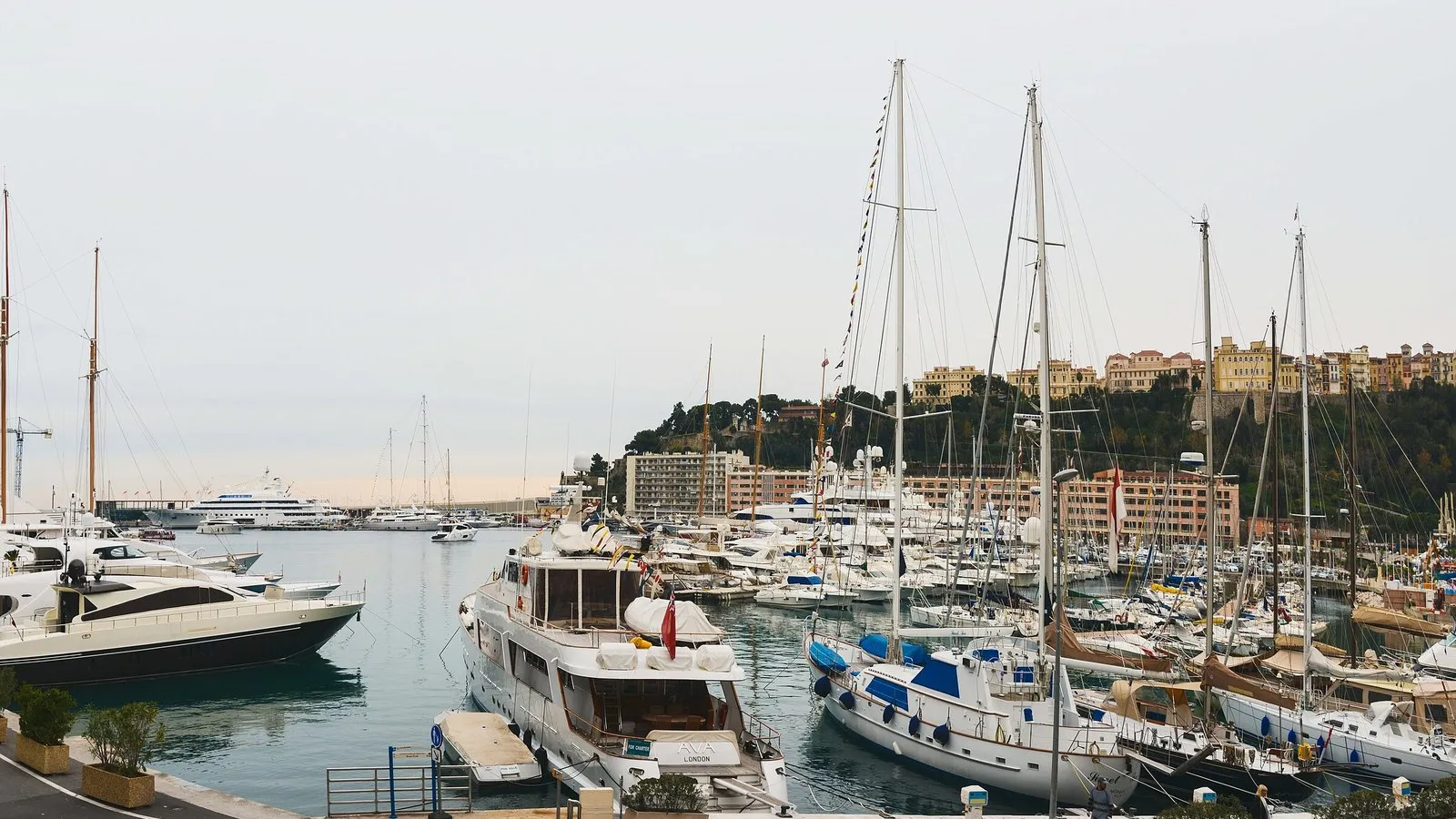
Cover photo: Port Hercule, Monaco. Photo: Jorge Láscar, Wikimedia Commons, CC BY 2.0, cropped.
Status as of 28 October 2026: based on Andorra's Law 2/2026 amending the Qualified Law on the Entry and Residence of Foreigners, Law 8/2026 on nationality and the Andorran personal income tax law, Monaco's Sovereign Ordinance 3.153 of 1964 on foreigners, Sovereign Ordinance 8.566 of 1986 on tax residence certificates as amended in 2020, the Monaco ordinance of 1869 and the Franco-Monegasque tax convention of 1963, the official pages of the Monaco government updated in 2026, the European Commission statement of 19 October 2026 on the EU association agreement with Andorra and San Marino, the German Foreign Tax Act (§§ 2 and 6 AStG) and the German Fiscal Code (§ 8 AO). We will update this guide when the law or official practice changes.