In this guide
- Why these four, and why the comparison is usually done badly
- The one feature only Cyprus has: sixty days
- Cyprus in 2026: the shape after the reform
- Malta: the refund machine and the newer FITWI
- Portugal: IFICI, not the old NHR story
- Bulgaria: the flat ten, and why it is not the shortcut it looks like
- Four founders, four answers
- The mistakes that cost founders the most
- What Germany and Romania will still ask
- Holding structures: which stack usually fits
- How to choose, honestly
- What we actually do for you
- The circle you join
- FAQ
- Next steps
- Sources
Status as of 5 November 2026: based on the Cyprus Income Tax Law 118(I)/2002 as amended by Law 244(I)/2025 and the Special Defence Contribution Law 117(I)/2002 as amended by Law 245(I)/2025 (both in force from 1 January 2026), Malta's Income Tax Act and Legal Notice 188 of 2025 (S.L. 123.217), Portugal's Tax Benefits Code article 58-A and Portaria 352/2024/1, Bulgaria's Corporate Income Tax Act and Personal Income Tax Act as applied in 2026, and Romania's Fiscal Code article 59. We update this guide when the rules move.
Every founder I know who left a high tax country remembers the moment it stopped being theory. For one it was a letter from the tax office asking him to justify a trip to Lisbon. For another it was the third consecutive year in which she paid more to the state than to her own team. For most it was quieter: a Sunday evening with a spreadsheet, the realisation that the country they lived in had quietly decided it owned half of everything they would ever build, and the question that follows naturally. Who agreed to that?
Nobody did, of course. You were born somewhere, you started a company somewhere, and the state that happened to sit on that patch of map sent you the bill. The European Union, for all its faults, gives you something that generations before you never had: the right to pick another patch. Twenty seven tax systems compete for the same people. Most of them compete badly. Four of them, for a founder, compete seriously: Cyprus, Malta, Portugal and Bulgaria.
This is not a ranking. Rankings are for people who want somebody else to choose for them. This is a walk through four very different answers to the same question, written so that by the end you know which one fits the way you actually want to live, work and travel. We will name the rules exactly, date every number, and say plainly where the marketing you have read elsewhere is wrong.
Why these four, and why the comparison is usually done badly
Most comparisons you find online line up corporate tax rates in a table and declare a winner. Bulgaria: 10%. Cyprus: 15%. Malta: 35%. Portugal: somewhere in the twenties. Conclusion: Bulgaria wins, Malta loses, move on.
That table is worse than useless, because it answers a question no founder actually asks. You do not pay the corporate rate and walk away. You pay the corporate rate, then you take money out of the company as salary or dividends, then you pay personal tax and social or health contributions, and all of it only works if you are genuinely tax resident where you claim to be and genuinely not tax resident where you used to live. The headline rate is the first line of a much longer story.
So we look at four things, in the order that matters in real life.
First, how you become and stay tax resident, and how many days of your year that costs you. For a founder who travels, this is the single most valuable feature a country can offer, and it is the one most comparisons ignore.
Second, what happens to profit inside the company and on the way out to you, because that is where the actual tax on your work is decided.
Third, what you must build on the ground, the substance, so that your old country cannot argue the company is still managed from your kitchen table back home.
Fourth, the life around it: language, light, schools, flights, the Schengen question, the kind of people you meet at dinner. A structure you hate living in is a structure you will abandon in three years, usually at the worst possible moment.
The one feature only Cyprus has: sixty days
Let us start with the feature that changes everything for a founder who does not want to sit in one place.
In almost every European country, tax residency for an individual turns on one of two ideas. Either you spend more than 183 days of the year there, or you have your habitual home or centre of vital interests there. Bulgaria works this way. Portugal works this way. Most of the Union works this way. Malta is different again: it has no statutory day test at all, and residence is judged on where you really live and spend most of the year.
Cyprus, alone among the four, gives you a second door. Under the Income Tax Law, you are Cyprus tax resident for a calendar year if you spend more than 183 days there, or if you meet all the conditions of the 60-day rule in that same year:
- you spend at least 60 days in Cyprus in the year;
- you do not spend more than 183 days in aggregate in any other single state in that year;
- you carry on a business in Cyprus, are employed in Cyprus, or hold an office as director of a company tax resident in Cyprus, at any time in the year, and that business, employment or office is not terminated during the year;
- you maintain a permanent residential property in Cyprus, owned or rented, during the year.
Fail one limb and that year you are not a 60-day resident. Since 2026 the law no longer adds a separate condition that you are not tax resident in any other state. That makes the rule cleaner to use, but it moves the real question to the treaties: if another country also claims you, the double tax treaty between it and Cyprus decides, and you want your facts to win that tie-breaker, not lose it.
Think about what sixty days means in practice. It is two months. It is the spring and a few weeks of autumn. The other ten months of the year are yours: a winter in the Alps with the children at a ski school, a summer on a boat, three months on a client's site in Dubai, a long stretch back home with your parents, as long as no single other country passes 183 days. No other EU country gives a founder a legal residence in exchange for that little time, while keeping the full EU passport of benefits: the single market, the euro, a recognised company, a real bank account.
This is why, when founders tell us the four countries are "roughly similar", we disagree. They are not similar at all. Three of them want most of your year. One of them wants two months and a real presence. Our full calendar guide is in the article on the Cyprus 60-day rule, with day counting examples, and the myths around it are dissected in the 60-day myth piece.
Cyprus in 2026: the shape after the reform
The 2026 reform changed the numbers founders quote at dinner parties, so let us get them right.
From 1 January 2026, the corporate income tax rate in Cyprus is 15%, under the Income Tax Law as amended by Law 244(I)/2025. The old 12.5% is gone, and anyone still selling it is selling a past that no longer exists. Fifteen percent is still well below what a German, French or Romanian founder pays on corporate profit plus trade tax and surcharges, and the rate comes with an EU address and a common law tradition.
The real engine, for a founder who takes profit out as dividends, is the Non-Dom status. A Cyprus tax resident who is not domiciled in Cyprus pays 0% Special Defence Contribution on dividends and interest under the SDC Law, for up to 17 of 20 years. A Cyprus domiciled resident pays 5% SDC on dividends from 2026 under the amended SDC Law. In short: 0% SDC on dividends and interest for Non-Dom. That is not the same as saying everything is untaxed. The General Healthcare System contribution, GESY, still applies to dividend income at 2.65%, capped on income of 180,000 euro a year. Employment income follows the normal personal income tax bands. Trading income follows its own rules. Our detailed guide on Non-Dom dividends and SDC walks through the mechanics.
For founders whose value sits in software, patents or other qualifying intellectual property, Cyprus also offers an IP Box under the nexus approach, with an effective rate that can sit near 3% of the qualifying profit under the nexus rules at the 15% corporate rate. The key word is qualifying: the profit must come from qualifying assets developed with qualifying expenditure, and the documentation burden is real. Our Cyprus IP Box guide explains which assets and which costs count.
And the less glamorous part. Cyprus is not yet a full Schengen member, so if you hold a non-EU passport and travel a lot inside Schengen, count those short-stay days separately. Summers are fierce. Rents in Limassol have climbed for years. The administration is slower than its marketing. Banks are cautious and want to understand your business. None of these is a reason not to go; all of them are reasons to go with a plan.
Malta: the refund machine and the newer FITWI
Malta is the country people underestimate because the headline rate looks punitive. The corporate tax rate is 35%. On a table, that is the worst of the four. In practice, for many international trading structures, Malta has for decades been one of the most efficient places in the Union, and the reason is the refund system.
Malta uses full imputation. The company pays 35% on its profits. When it distributes a dividend from qualifying trading profits, the shareholder can claim a refund of part of the tax the company paid, most commonly six sevenths. Do the arithmetic and the net tax on those profits can sit near 5%, when the refund is claimed and paid. That condition matters: the effective rate is not automatic. It depends on the nature of the profits, on the refund claim being made correctly, and on the refund actually being paid. It also typically means a two company structure, a Maltese trading company and a holding company that receives the refund, which brings two sets of accounts, two audits and real advisers in Valletta or Sliema.
In 2025 Malta added a second option, the Final Income Tax Without Imputation, or FITWI, under Legal Notice 188 of 2025, subsidiary legislation 123.217. A company can elect to pay a final 15% tax on its chargeable income, without imputation and without shareholder refunds on those profits. The election binds for five consecutive years of assessment and is available from the year of assessment 2025. The election is made by notice to the Commissioner in the form and by the date the Commissioner sets; your Maltese adviser confirms the current procedure. For a founder who hated the idea of cash sitting in a refund queue, FITWI is simpler. For a founder whose profits qualify for the six sevenths refund, the old route can still produce less tax. You compare both on your numbers before you elect, because you live with the choice for five years.
On the personal side, Malta's individual tax residence follows facts and circumstances; there is no statutory day count, and advisers usually look at where you live and spend most of the year. For people who are resident but not domiciled in Malta, the remittance basis means foreign income is in principle taxed only when it is brought into Malta, and foreign capital gains are generally outside the net even if remitted. There is a minimum annual tax for many such individuals with substantial foreign income, so check your profile with a Maltese adviser.
Malta is in Schengen, speaks English, runs on English style company law, and has a deep bench of fund, gaming and fintech professionals. It is also small, dense and crowded in summer, and housing in the popular areas is expensive. The founder who thrives there usually runs a regulated or semi regulated business and wants to be surrounded by the people who understand it.
Stop financing a state that treats your calendar as its property.
Tell us how you earn, where you travel and who moves with you. We map Cyprus, Malta, Portugal and Bulgaria against your facts and tell you which structure fits, with licensed partners ready to execute.
I want my structure → Or start with the Plan B form
We coordinate; legal, corporate, immigration and tax services are provided by independent licensed partners in their own name and under their own responsibility. This guide is general information, not tax, legal or immigration advice.
Portugal: IFICI, not the old NHR story
Portugal has the best marketing of the four, and for years the marketing was mostly true. The Non-Habitual Resident regime brought tens of thousands of foreigners to Lisbon, Porto and the Algarve. Then it closed to typical new entrants, and much of what you still read online describes a regime you can no longer join.
What replaced it, from 2024, is IFICI, the incentive for scientific research and innovation under article 58-A of the Tax Benefits Code. In outline, an individual who becomes Portuguese tax resident, who was not resident in Portugal in any of the previous five years, and who carries out a qualifying activity can be taxed at a special 20% rate on qualifying Portuguese employment and professional income for ten years. Foreign-source income is generally handled through an exemption method, with exceptions that your adviser maps category by category. Registration has a hard deadline: under Portaria 352/2024/1, article 2(1), you register by 15 January of the year after the year you became resident. Miss that and the year is gone.
The word that matters is qualifying. IFICI is aimed at research, innovation, startup and highly qualified roles, and the list of eligible activities refers to specific frameworks, including the startup law, Lei 21/2023, referenced in article 2(2)(f) of the Portaria. A founder who simply moves to Lisbon and keeps running a foreign holding company does not automatically qualify. A founder who is employed by a certified startup, or works in a qualifying research role, may. The administrative guidance on how strictly roles are read has evolved; have the role description checked against it before you apply. IFICI does not exempt everything.
Portuguese tax residency follows the European pattern: more than 183 days in any 12 month period starting or ending in the year, or, on any day of that period, a home in Portugal held in conditions that suggest a current intention to keep and occupy it as your habitual residence. There is no 60-day door. If you move to Portugal, Portugal wants to be where you live.
And yet. Portugal has something none of the other three can match in the same way: depth of life. Atlantic light, a real cultural capital, international schools, a large community of founders and remote engineers, food and wine that ask nothing of you except time. Madeira adds its own corporate regime, which we cover in our guide to the Madeira 5% licence. For the founder who wants to put down roots, raise children and build a team locally, Portugal can be the right answer even when it is not the cheapest one on paper.
Bulgaria: the flat ten, and why it is not the shortcut it looks like
Now the country that keeps appearing at the bottom of every rate table, which on that table means the top.
Bulgaria has a 10% corporate income tax, a flat 10% personal income tax, and a 5% final withholding tax on dividends paid to individuals. The 2026 State Budget Act, adopted on 24 July 2026 after a draft that had proposed doubling the dividend tax, left the 5% rate unchanged. Bulgaria joined Schengen fully on 1 January 2025 and the euro area on 1 January 2026. On paper the combined burden on distributed profit, 10% inside the company and 5% on the net dividend, is about 14.5%. That is a genuinely competitive number, and the country is cheaper to live in than any of the other three.
So why is Bulgaria not the obvious winner? Because the number only belongs to you if you actually live there.
Bulgarian personal tax residency turns on the familiar tests: a permanent address in Bulgaria (unless your centre of vital interests is elsewhere), presence of more than 183 days in any twelve month period, or your centre of vital interests in Bulgaria. There is no 60-day rule. A founder who registers a Bulgarian company, keeps living in Munich or Bucharest, and flies to Sofia twice a year has built a Bulgarian company managed from Germany or Romania. Its place of effective management, and very likely its profits, belong to the country where the decisions are really taken. The 10% rate then decorates a structure that the home tax office will dismantle.
To make Bulgaria work you must genuinely relocate: a home, most of your year, real directors, real decisions taken in Sofia or Plovdiv or Varna, contributions paid into the Bulgarian system. Once you do that, Bulgaria can yield a little more than Cyprus for some profiles, but the net difference versus Cyprus is often small once substance costs are counted. You pay for the lower rate with your calendar. A Cypriot Non-Dom with a 60-day presence and a Bulgarian resident spending most of the year in Sofia end up within touching distance of each other on tax, and very far apart in how they live.
That is the honest Bulgarian case. If you love the mountains, the Black Sea, a lower cost of living, and you are happy to live there most of the year, Bulgaria is a serious, underrated choice. If you are choosing it only because 10% looks smaller than 15% on a table, you are choosing the wrong thing.
Four founders, four answers
Rules come alive when you watch them meet real lives. The four cases below are composites drawn from the kinds of files we see. Names are invented, facts are typical, and the numbers are illustrations, not promises.
Andrei, the software founder who lives on planes
Andrei is 38, Romanian, and runs a B2B software company with clients in Germany, the Gulf and the United States. He spends roughly six weeks a year in Dubai, two months in the United States visiting clients, a month in Romania with family and the rest scattered across Europe. He has no children yet and no wish to sit in any one country.
For Andrei, the tax rate is almost secondary. What he needs is a residence he can actually hold without giving up the life he has built. Portugal and Bulgaria would want most of his year. Malta would want a credible story that Malta is where he lives. Cyprus, under the 60-day rule, asks for two months, a rented flat he keeps all year, a directorship in his Cyprus company that runs through the year, and the discipline never to spend more than 183 days in any single other country.
His structure: a Cyprus company, managed and controlled from Cyprus with board meetings held there, paying 15% on its profits; Andrei as a Cyprus tax resident Non-Dom taking dividends with 0% SDC and paying GESY within the cap; a day log kept from the first of January; a Romanian exit handled before the move, which we come back to below. The difference between him and a Bulgarian resident is not a few points of tax. It is ten months of freedom.
Katrin, the gaming entrepreneur who wants an ecosystem
Katrin is German, 45, and runs a licensed online gaming platform with fifty staff. She wants to sit inside a regulator she understands, hire compliance people who have done this before, and live somewhere English speaking in Schengen, because her partner travels on a non-EU passport.
Malta fits her almost perfectly. The regulated gaming ecosystem is there, the professionals are there, and Schengen solves her partner's travel. Tax-wise, she and her advisers compare the classic refund route, 35% with a six sevenths refund that can bring the net tax near 5% when the refund is claimed and paid, with the FITWI election at 15% final for five years. Her profits are trading profits that qualify for the refund, so the refund route wins on numbers, and she accepts the two company structure and the cash flow lag. Malta is a good choice for her not because of a rate, but because the whole country is built around businesses like hers.
Miguel and Ana, the couple who want a home
Miguel is Spanish, Ana Romanian. They are 34 and 33, with a two year old and another on the way. Miguel is a senior engineer joining a certified Portuguese startup as head of product; Ana runs a small design studio. They want good schools in ten years, a city with culture, the ocean, and a community of people like them.
For them, Portugal is the answer, and IFICI is the reason it is also an efficient one. Miguel's role is checked against the eligible activities before he signs, he registers by 15 January of the following year, and his qualifying Portuguese employment income is taxed at 20% for ten years. Ana's studio income is mapped category by category, because IFICI does not cover everything. They pay more tax than Andrei will in Cyprus. They also never have to count days, and they have chosen a place to raise children, not a place to park a company.
Markus, the industrial consultant who loves the mountains
Markus is 52, German, divorced, with grown children. He runs a one person engineering consultancy and is tired of Bavaria. He has fallen for Bansko and the Pirin mountains, wants a lower cost of living and is happy to spend most of the year in one place. He accepts living in Bulgaria most of the year.
For Markus, Bulgaria is honest and good. He moves, rents a home, registers a Bulgarian company with himself as resident director, pays 10% on profits and 5% on dividends, and pays into the Bulgarian social and health system. He compares it with Cyprus and finds the net difference after his real costs is small. He chooses Bulgaria because he wants to live there, which is exactly the only good reason to choose it. His German exit, with the extended limited tax liability and the exit tax question on his shareholding, is planned with a German adviser before the move.
The mistakes that cost founders the most
After enough files, you stop being surprised by mistakes. They are almost always the same handful.
Treating the company's country as your country. A Cyprus, Maltese, Portuguese or Bulgarian company does not make you resident anywhere. If you keep living at home and run the company from there, your home state will argue that the company is managed there, and it will often win. Our guide to place of effective management in Cyprus shows what real management looks like.
Using the 60-day rule without the fourth limb. Founders remember the 60 days and forget that the business, employment or directorship must run through the whole year and that a permanent home must be maintained all year. A flat rented for the summer is not enough.
Forgetting that "no other state over 183 days" is per country. You can travel as much as you like, but if one single other state passes 183 days in that year, the 60-day route fails for that year.
Electing FITWI by reflex. Fifteen percent final sounds clean. If your profits would have qualified for the six sevenths refund, you may have locked yourself into five years of higher tax.
Assuming Portugal still means NHR. It does not, for typical newcomers. And missing the IFICI registration deadline of 15 January after the year of arrival costs you the year.
Choosing Bulgaria for the rate and Cyprus for the lifestyle at the same time. You cannot hold a Bulgarian company and claim Cyprus residence and expect both to survive scrutiny. Pick one centre of life and build around it.
Leaving the old country by accident instead of on purpose. This is the expensive one, and it deserves its own section.
What Germany and Romania will still ask
Every new tax home begins with an exit from an old one, and the old one rarely lets go gracefully.
If you are leaving Germany, three things matter. First, the exit tax under section 6 of the Foreign Tax Act can tax unrealised gains on shareholdings of at least 1% in a company when you give up unlimited tax liability, with rules on deferral and instalments that changed in recent years. Second, the extended limited tax liability under section 2 of the Foreign Tax Act can follow you for years if you move to a low tax country and keep substantial economic interests in Germany. Third, and most often underestimated, if you keep a dwelling in Germany available to you, you may remain unlimitedly tax liable simply because of it. Plan the exit with a German tax adviser before you move, not after. Our article on German exit tax and year end timing covers the timing.
If you are leaving Romania, the rules sit in article 59 of the Fiscal Code. You notify ANAF using the official form at least 30 days before departure. If you move to a country with which Romania has a double tax treaty, and Romania has treaties with Cyprus, Malta, Portugal and Bulgaria, your Romanian residence ends on the basis of a tax residence certificate from the new state. Because Cyprus has a treaty with Romania, a tie-breaker opens when both states claim you, and your facts in Cyprus decide it. Without the paperwork, Romania can keep treating you as resident, and the dividend tax you thought you had left behind follows you.
The underlying principle is the same everywhere: you must be able to prove where you live, not just where you are registered. Our guide on residency versus tax residency explains why the two are not the same thing.
Holding structures: which stack usually fits
Founders often ask which country makes the best holding. The honest answer is that the holding should follow the person, not the other way round.
If you live in Cyprus as a Non-Dom, a Cyprus holding above your operating companies keeps the dividend flow clean: dividends received by a Cyprus company from qualifying subsidiaries are generally exempt, and dividends paid onward to you carry 0% SDC as a Non-Dom. Our Cyprus holding guide explains participation exemptions and substance.
If you live in Malta, the refund system usually wants a Maltese holding to receive refunds, with its own audit and administration.
If you live in Portugal under IFICI, the question is less the holding and more how each income category is treated at your personal level.
If you live in Bulgaria, a Bulgarian company with you as resident director is usually the simplest answer, and adding foreign layers mostly adds cost.
What never works is a holding in one of these countries owned by a person who really lives in a high tax state. That structure invites controlled foreign company rules and management arguments, and it fails at exactly the moment you need it.
How to choose, honestly
Strip away the rates and the brochures and the choice comes down to a few questions only you can answer.
How many days a year do you want to give to one country? If the answer is "as few as legally possible", only Cyprus offers a 60-day door. If you are happy to give most of your year, all four are open to you and the choice turns on lifestyle and business.
Is your business regulated, and does it need an ecosystem? Malta is hard to beat for gaming, funds and certain fintech activities.
Do you want to put down roots and raise children in a big cultural setting, and is your work a qualifying IFICI activity? Portugal rewards you for that.
Do you want the lowest cost of living and a flat, simple system, and will you genuinely live there? Bulgaria deserves a serious look.
And under all of it: are you prepared to do the exit from your current country properly? None of the four works if you do not.
What we actually do for you
We start from your life, not from a rate. You tell us how you earn, where you travel, who moves with you and what you want your week to feel like in three years. We map those facts against the four systems, model the tax at company and personal level with real figures, and show you the trade-offs in plain language. Then we coordinate licensed partners in the chosen country to build the company, the residence and the bank relationship, and advisers in your home country to handle the exit. You get one plan and one calendar, and the partners execute in their own name.
The circle you join
There is one more thing the tables never show. When you move, you change your company in a literal sense: the people at the next table, the conversations at school gates, the founders you call when something breaks. Limassol has a dense founder and trading community. Malta's professionals know regulated businesses inside out. Lisbon has a cosmopolitan tech crowd. Sofia and Bansko have their own quieter, entrepreneurial energy. Choosing a country is choosing a circle. Choose the one whose questions you want to be asked.
FAQ
Is Cyprus corporate tax still 12.5%?
No. From 1 January 2026 the rate is 15% under the Income Tax Law as amended by Law 244(I)/2025.
Does Non-Dom mean nothing is taxed in Cyprus?
No. It means 0% SDC on dividends and interest for a Non-Dom under the SDC Law, with GESY at 2.65% still due within the 180,000 euro cap. Employment income, trading income and other categories follow their own rules.
Can I become Cyprus tax resident with only 60 days?
Yes, if you meet every limb of the 60-day rule in the same calendar year: at least 60 days in Cyprus, no more than 183 days in any other single state, a Cyprus business, employment or directorship not terminated during the year, and a permanent home in Cyprus kept during the year.
Does Malta have a 183-day test?
Malta has no statutory day test. Residence is judged on facts and circumstances, chiefly where you live and spend most of the year.
Is Malta's effective 5% automatic?
No. It depends on the nature of the profits, the refund claim and the actual payment of the refund. FITWI at 15% final is the alternative if you elect it and accept that no refund applies, for five years.
Is Portugal's old NHR still open?
Not for typical new entrants. IFICI under article 58-A of the Tax Benefits Code is the current incentive, and it requires a qualifying activity and registration by 15 January of the following year.
Is Bulgaria cheaper than Cyprus?
On rates, Bulgaria's 10% corporate tax and 5% dividend tax look lower. Bulgaria yields a little more only if you genuinely relocate there, and the net difference versus Cyprus is often small once substance costs are counted. Bulgaria has no 60-day rule.
Is Bulgaria in Schengen and the euro area?
Yes. Bulgaria joined Schengen fully on 1 January 2025 and adopted the euro on 1 January 2026. Malta and Portugal are in Schengen; Cyprus is not yet a full member.
Will Germany or Romania still tax me after I move?
They can. Germany through exit tax, extended limited liability or a dwelling you keep; Romania under article 59 if the exit is not documented with a residence certificate from the new treaty state. Plan the exit before you move.
Next steps
You now have the four doors side by side and the reasons behind each. The next step is to put your own facts through them: your income, your calendar, your family, your exit. That is where a choice becomes a plan.
Your life deserves a structure you can defend, not a rate on a table.
Write to us with your situation and we come back with a first view of which country fits and what the exit from your current state requires. We design the structure and coordinate the licensed partners who make it real.
I want my structure → Or start with the Plan B form
We coordinate; legal, corporate, immigration and tax services are provided by independent licensed partners in their own name and under their own responsibility. This guide is general information, not tax, legal or immigration advice.
Sources
- Cyprus Income Tax Law 118(I)/2002 as amended by Law 244(I)/2025, and the Tax Department guidance on residence and the 60-day rule: https://www.cylaw.org
- Cyprus Special Defence Contribution Law 117(I)/2002 as amended by Law 245(I)/2025: https://www.cylaw.org/nomoi/arith/2025_1_245.pdf
- Cyprus General Healthcare System contributions: https://www.gesy.org.cy/en-us/hiofinancing
- Malta, Final Income Tax Without Imputation Rules, S.L. 123.217 and Legal Notice 188 of 2025: https://legislation.mt/eli/sl/123.217
- Portugal, Tax Benefits Code article 58-A and Portaria 352/2024/1: https://diariodarepublica.pt
- Bulgaria, 2026 State Budget Act, State Gazette No. 69 of 31 July 2026: https://dv.parliament.bg
- Bulgaria, Personal Income Tax Act article 38 (dividend tax) and Corporate Income Tax Act: https://nra.bg
- Germany, Foreign Tax Act sections 2 and 6: https://www.gesetze-im-internet.de/astg/
- Romania, Fiscal Code article 59 and the departure procedure: https://serviciipublice.gov.ro/serviciu/stabilirea-rezidentei-fiscale-pentru-persoanele-fizice-la-sosirea-plecarea-in-din-romania
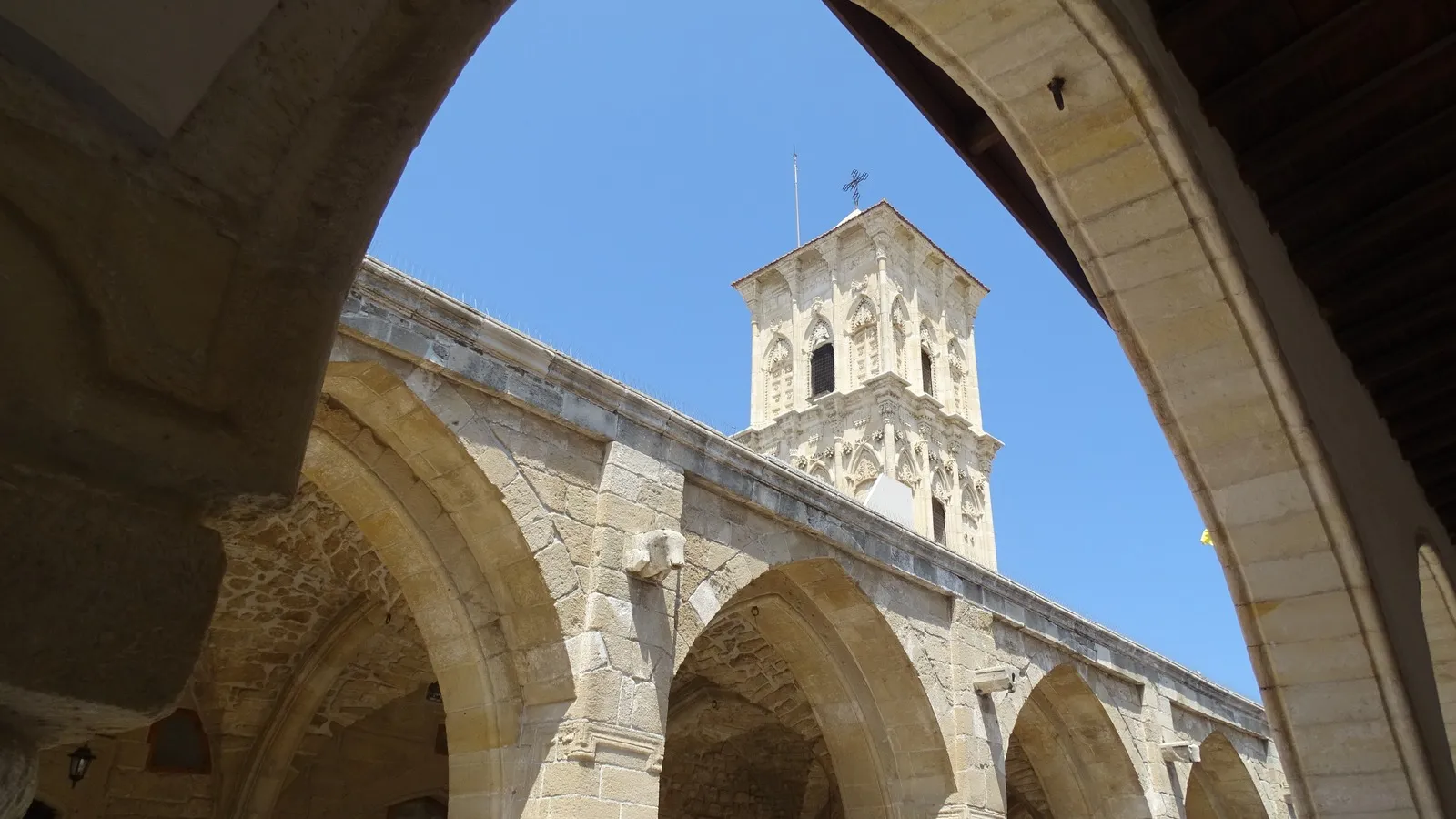
Cover photo: Church of Saint Lazarus, Larnaca, on a sunny day.