An EU Company Without Moving: Estonia, Bulgaria and Hungary Compared, Why e-Residency Is Not Residency, and What It Costs at Distribution
Estonia, Bulgaria or Hungary without moving? e-Residency is not residency, the OÜ costs most at distribution, and where the company is taxed.
In this guide
- The rule that applies to all three
- Estonia: e-Residency is not residency
- Bulgaria: 10% and a list you need to know about
- Hungary: 9% and a capped social contribution
- Decision criteria: which country fits which founder
- The arithmetic for founders who really move
- The three side by side
- How it compares with Cyprus, and when Cyprus is not the answer
- Four worked cases
- Common mistakes with EU companies abroad
- If you do move: the first steps in any of the three
- Evidence pack: where is your company managed?
- If your home country reclassifies the company
- Timeline: moving management the right way
- FAQ
- How this fits with the rest of your plan
- Sources
Status as of 30 October 2026 (Bulgaria's FATF status updated on 30 October 2026; all other points as verified on 21 October 2026): based on the Estonian Tax and Customs Board's published tax rates for 2026 and its guidance on the taxation of dividends, the official e-Residency programme pages, the Bulgarian Corporate Income Tax Act and Personal Income Taxes Act as summarised by the Bulgarian National Revenue Agency, Hungary's National Tax and Customs Administration (NAV) guidance on corporate tax and on the social contribution tax for 2026, the FATF statement on jurisdictions under increased monitoring of 30 October 2026, and the OECD Model Tax Convention. We will update this guide when the law, the FATF lists or official practice change.
After "a Cyprus company without moving", the second most common idea we hear is its European cousin: "I will open a company in Estonia, Bulgaria or Hungary and run it from home." Each country is pitched with one headline rate. Estonia: corporate tax only when profit is distributed, at 22/78. Bulgaria: 10%. Hungary: 9%. Good numbers. Let us see who actually gets them.
Each number is real. But none of them answers the question that matters, the same one we answered for Cyprus in today's companion guide: where is the company managed, and where do you live? We take the three countries one by one. We show what you keep from each when the money reaches you. And why the company follows you, not the other way round.
The view behind this guide is simple. Competition between states for companies is healthy. Every one of these three countries has made a good choice, and it deserves respect. Using that choice is legitimate, and it is your right. Pretending to use it, from a desk in a different country, is not. And it does not work.
The rule that applies to all three
Rule one: the company pays where it is effectively managed. You are the only director and the only decision maker, and you live in London, Lyon, Cluj or Munich? Then the company is managed there. Your home country will usually treat it as its own resident company and tax its profit at home rates. The country of incorporation may also treat it as resident, because it was incorporated there. Then the tax treaty between the two decides, and most treaties look to the place of effective management or leave it to the authorities to agree.
Rule two: the dividend pays where you live. A foreign company does not change your dividend tax at home. Want a different result? Move your life, not your registration.
Hold on to these two rules. Everything below is a variation on them.
Estonia: e-Residency is not residency
What e-Residency is
Estonia's e-Residency programme gives you a government-issued digital identity. You sign documents electronically, and found and run an Estonian company online. It is excellent public infrastructure, and Estonia deserves the credit.
But it is not residency. It gives you no right to live in Estonia, no residence permit, and no residence for taxation. The programme says so itself. An e-resident who lives in Germany is a German resident who owns an Estonian company. That is all.
How the Estonian company is taxed
Estonia taxes the company when it pays out, not when it earns. Keep the profit in the company and you pay no corporate income tax on it. Distribute, and the company pays tax on the distribution. For 2026 the Estonian Tax and Customs Board states the rate as 22/78 of the net distribution, which is 22% of the gross amount. The lower rate for regular dividends was abolished from 2025, and since then Estonia no longer withholds additional tax on dividends paid to individuals, except for a transitional rule on older profits.
A detail many articles miss. A rise to 24% from 2026, which would have meant 24/76 on distributions, was enacted in June 2025 alongside the repeal of the planned security tax. The Riigikogu cancelled it on 3 December 2025, before it took effect. The Tax and Customs Board's 2026 rate table, last updated in March 2026, shows 22/78.
What it costs at distribution
On the numbers. EUR 100,000 of profit, distributed in full. Estonia keeps EUR 22,000. EUR 78,000 reaches you. Then your home country taxes the dividend:
- United Kingdom, higher rate (35.75% for 2026/27): about EUR 27,900. You keep about EUR 50,100.
- Germany, flat tax with solidarity surcharge (26.375%): about EUR 20,600. You keep about EUR 57,400.
- Romania (16% from 2026, plus the 10% health contribution within its cap): at least EUR 12,500. You keep at most about EUR 65,500.
That is why we call the Estonian company the most expensive of the three at distribution. Its real gain is deferral: as long as profit stays in the company, no corporate tax is due. For a founder who reinvests everything for years, that is worth a lot. For a founder who lives on the profit, it is the most expensive option.
And if you run it from home
All of the above assumes Estonia is allowed to tax the company. You manage it from your home country? Then your home country will usually treat it as resident there and tax its profit every year at home rates, distributed or not. The deferral, in practice, disappears.
Bulgaria: 10% and a list you need to know about
How it is taxed
Bulgaria taxes corporate profit at a flat 10%, one of the lowest rates in the EU, and withholds 5% on dividends paid to individuals. Since 1 January 2026 Bulgaria uses the euro. A clear choice for people who actually work there.
The FATF status
In October 2023 the FATF placed Bulgaria under increased monitoring, the list known as the grey list. In its statement of 30 October 2026, after the October plenary in Paris, the FATF removed Bulgaria from that list, finding that Bulgaria had met the commitments in its action plan. Bulgaria continues to work with MONEYVAL, the Council of Europe's anti-money-laundering body, to sustain the improvements.
What does that mean for you? Bulgaria is no longer on the grey list. Banks and payment providers update their internal risk assessments with a delay, so some extra questions may continue for a while, but this cost is fading. The removal does not change the tax question: where your company is managed still decides where it is taxed.
What it costs at distribution
EUR 100,000 of profit, distributed in full: 10% corporate tax, EUR 10,000; 5% withholding on the EUR 90,000 dividend, EUR 4,500. Then your home country taxes the dividend, usually with credit for the 5%. A higher-rate UK taxpayer pays UK dividend tax on top, less the credit. A German resident pays the flat tax, less the creditable Bulgarian withholding.
And if you run it from home
Same rule as Estonia: a Bulgarian company managed from your home country is usually taxed at home. Ten per cent is Bulgaria's rate. Run the company from Manchester and the UK can tax it as a UK-managed company as well.
Hungary: 9% and a capped social contribution
How it is taxed
Hungary has the lowest corporate tax rate in the EU: 9%. Dividends paid to Hungarian resident individuals carry 15% personal income tax and a 13% social contribution tax, which applies only until the annual cap is reached; for 2026 NAV sets that cap at HUF 7,747,200, 24 times the minimum wage. Dividends paid to non-resident individuals carry Hungarian withholding, reduced by the relevant tax treaty.
The catch for non-residents
The low rate is built for companies that operate in Hungary. A Hungarian company run from abroad by a single founder faces the same management question as the others. And because 9% is below the 15% line many European countries now use for their controlled foreign company rules, some home countries can attribute certain profits of a Hungarian company straight to a resident shareholder, especially passive or mobile income. The low rate can cost you at home.
What it costs at distribution
EUR 100,000 of profit: 9% corporate tax, EUR 9,000. EUR 91,000 to distribute, then Hungarian withholding as limited by the treaty, then home-country dividend tax with credit. The low corporate rate pays off only if the company is genuinely managed in Hungary.
Decision criteria: which country fits which founder
The three countries are not interchangeable. Each suits a different kind of business and a different kind of life. And each fails in a different way when the founder stays at home.
Estonia wins for the reinvestor who actually lives there. The distribution model rewards a company that keeps its profit at work: a software business that hires, a trading company that funds stock, a founder who is years away from needing dividends. It suits people comfortable with a digital administration who will build their working life in Tallinn or Tartu. It does not suit a consultant who needs most of the profit every year: distribution is taxed at 22% of the gross amount and the dividend is then taxed again where he lives.
Bulgaria fits a business with a real Bulgarian base. A low flat corporate rate and a 5% dividend withholding are attractive for a company with an office, staff and clients in Sofia or Plovdiv, run by people who live there. Since the FATF removed Bulgaria from the grey list on 30 October 2026, banking friction should ease over time, but Bulgaria still does not help a founder who runs the company from another country.
Hungary wins for an operating company with real Hungarian activity. The 9% rate, the lowest in the EU, suits manufacturing, development centres and service operations with Hungarian staff and management. For a resident individual, the dividend adds 15% personal income tax and a social contribution with an annual cap. Count both levels.
All three fail the same test for a founder who stays at home. You are the only decision maker and you live elsewhere? Then the company is managed where you live. That is the first criterion, and it beats the other three.
This is how we set it up: write down the country where you will live, the country where your team will work and the share of profit you need each year. If the three answers point to the same place, that place is usually your answer. If they point to three different places, you need a plan, not a company.
The arithmetic for founders who really move
So far you stayed at home. Now the same EUR 100,000 of profit for a founder who genuinely lives in the country and runs the company from there, with the whole profit distributed in 2026. Simplified illustrations before social insurance on salary, accounting and local charges.
- Estonia. Distribution tax at 22% of the gross amount: EUR 22,000. The EUR 78,000 dividend reaches an Estonian resident individual without further withholding. You keep about EUR 78,000. Retain half the profit instead, and only the distributed half bears tax that year.
- Bulgaria. Corporate tax at 10%: EUR 10,000. Dividend tax at 5% on EUR 90,000: EUR 4,500. You keep about EUR 85,500.
- Hungary. Corporate tax at 9%: EUR 9,000. Personal income tax at 15% on the EUR 91,000 dividend: EUR 13,650, so you keep about EUR 77,350 before the 13% social contribution. That contribution applies only up to the annual cap of HUF 7,747,200 in 2026, and how much of the cap is left depends on your other income in the year.
- Cyprus, for comparison. Corporate tax at 15%: EUR 15,000. As a Non-Dom resident, no SDC on the EUR 85,000 dividend, plus GESY at 2.65% within the cap: about EUR 2,250. You keep about EUR 82,750.
Said plainly: on pure arithmetic, a founder who genuinely lives in Bulgaria and runs the company from there keeps more of a fully distributed profit than a Non-Dom founder in Cyprus. We say it because it is true. And because the choice should rest on the whole life you want, not on a table. Two conclusions follow. First, for founders who really move, the four countries sit closer together than their headline corporate rates suggest, because the dividend level changes the order. Second, the numbers are one input. Where you want to live, the language your children will learn, banking, healthcare, flights home and the personal regime for people who arrive from abroad usually outweigh a few thousand euros either way.
The three side by side
- Estonia. Corporate tax: due only when profit is distributed, at 22/78 (22% of the gross amount) in 2026; profit kept in the company is taxed when it is paid out. Withholding on dividends to individuals: none since 2025, except transitional cases. Wins for: founders who reinvest and genuinely manage the company from Estonia. Weak point: most expensive at distribution; e-Residency is not residency.
- Bulgaria. Corporate tax: 10%. Withholding on dividends to individuals: 5%. Best for: businesses with a real Bulgarian operation. Weak point: off the FATF grey list since 30 October 2026, but banks may take time to catch up.
- Hungary. Corporate tax: 9%. Dividends: 15% plus capped social contribution for residents, treaty-limited withholding for non-residents. Wins for: businesses with real Hungarian operations. Weak point: the low rate can trigger home-country CFC rules.
All three share the same weak point for anyone who stays at home: the company is managed where you are. Move for real, and that weak point usually goes.
How it compares with Cyprus, and when Cyprus is not the answer
We work with Cyprus, so read this with that in mind.
Cyprus has the same management rule as everyone else. A Cyprus company run from your home country is no better than an Estonian one; our companion guide on a Cyprus company without moving shows the numbers. The gain appears when you move. Cyprus combines a 15% corporate rate with a personal regime for people who are not domiciled there: no SDC on dividends and interest, with the GESY health contribution capped at EUR 4,770 a year. On EUR 100,000 of profit, a Non-Dom founder who lives in Cyprus and runs the company from there keeps about EUR 82,750.
None of the three countries above has a special regime for incoming founders like Cyprus Non-Dom. Their rates apply to everyone resident there, and Bulgaria's low rates reach the dividend as well as the company. But they only help if you and the company genuinely are there. So the real comparison is not "which company?" but "where will you live?" If the answer is Estonia, Bulgaria or Hungary, their companies can be excellent. If the answer is home, no foreign company will change much. If the answer is Cyprus, the Cyprus company is usually the cleanest fit.
Bulgaria deserves a straight answer. Yes, a founder who really lives in Bulgaria and runs the company from there keeps a little more: in the example above about EUR 85,500 against about EUR 82,750 in Cyprus, a gap of about EUR 2,750 on EUR 100,000 of profit. But only if you actually move there, and the gap is small. What Cyprus offers and neither Bulgaria nor the other two countries do is flexibility: the 60-day rule. In Estonia, Bulgaria and Hungary, becoming tax resident by counting days means spending about half the year there, 183 days. In Cyprus you can be tax resident with 60 days, if you meet all four conditions in the same tax year: you spend at least 60 days in Cyprus; you do not spend more than 183 days in any other single country; you carry on a business in Cyprus, are employed in Cyprus or hold an office with a company tax resident in Cyprus, and that link does not end during the year; and you keep a permanent home in Cyprus that you own or rent. Until the end of 2025 there was a fifth condition, not being tax resident in any other country; Law 244(I)/2025 removed it from 1 January 2026. That is the real strength of Cyprus: you can spend a large part of the year elsewhere and still be tax resident in Cyprus. Your home country still applies its own rules, and where both countries claim you, the tie-breaker in the tax treaty decides.
When is Cyprus not the answer? When you want to live in one of those three countries. When your business is genuinely built there. Or when deferral in an Estonian company suits a long reinvestment phase better than a Cyprus dividend plan. Then we tell you so.
Four worked cases
Pierre, Bordeaux: an Estonian OÜ from France
Pierre has run an e-resident OÜ for three years and invoices French clients. He decides everything from Bordeaux. His adviser warns that the French tax authority can treat the OÜ as effectively managed in France, with French corporate tax and penalties for the past years. Pierre regularises the position, transfers the business to a French company and later compares a real move. The lesson: e-Residency is an excellent tool, not a tax address.
Laura, Bucharest: a Bulgarian company for a Romanian business
Laura was offered a Bulgarian company "at 10%" for her software business in Bucharest. The calculation shows that a company managed from Bucharest would be treated as a Romanian legal person, and her payment provider would still ask why a Bulgarian company has no real Bulgarian base. She stays with her Romanian company until she decides where to live.
Jan, Rotterdam: a real Hungarian operation
Jan opens a development office in Budapest with six engineers and a local managing director who runs it day to day. The Hungarian company's profit is Hungarian profit at 9%. His dividends are still taxed in the Netherlands, but the operating profit is genuinely earned and managed in Hungary. The lesson: this is the low rate used right, with real people and real management there.
Sofia, Milan: deferral that did not suit her
Sofia runs a design studio and was attracted by Estonia's deferral of corporate tax until profit is distributed. She needs around 80% of the profit each year to live on. Even in Tallinn, most of the profit would be distributed and taxed at 22% of the gross amount, so deferral would help with only a fifth of it. Staying in Milan, the OÜ would be managed in Italy and taxed there anyway. She compares a real move against her current Italian set-up and keeps the latter until she settles where to live. The lesson: deferral pays only if you leave the money in the company.
Common mistakes with EU companies abroad
- Confusing digital access with residence. e-Residency makes Estonian administration easy from anywhere. It moves neither you nor your company.
- Comparing headline corporate rates only. A 9% or 10% rate tells you little if the profit is distributed and taxed again where you live. Compare what actually lands in your own bank account.
- Ignoring the low-tax tests at home. Many European countries can tax a resident shareholder on low-taxed passive income of a foreign company he controls. A rate below your home country's threshold can pull the profit straight back into your own return.
- Keeping every decision on your laptop at home. The contracts, the approvals and the emails show where the company is managed. A local registered address does not.
- Underestimating banking. Banks and payment providers look at where the company is managed, where the owner lives and, for Bulgaria, at its recent grey-list history until their risk models catch up with the FATF's removal of 30 October 2026. A company with no real link to its registration country will face questions.
- Treating deferral as a saving. Estonian deferral pushes tax on retained profit into the future. Distribute, and you pay. Valuable for reinvestors, close to irrelevant for people who need the profit every year.
- Treating the FATF removal as a tax change. The FATF removed Bulgaria from the grey list on 30 October 2026, and banking friction may ease over time. That does not change where your company is managed or how your dividend is taxed.
If you do move: the first steps in any of the three
Will you genuinely live in Estonia, Bulgaria or Hungary? Then the order of steps is the same as for any real move inside the EU. This is how we set it up:
- Register your residence. Register as an EU citizen resident with the local authorities, take a lease or buy a home, and keep proof of your arrival date.
- Leave home cleanly. Deregister where your home country requires it, give up the home that would keep you resident, and file the departure return. Check exit rules on your shares before you leave, not after.
- Move the management. Board meetings where you now live, contracts signed there, books and records kept there. An existing company moves its management? Document the date and the decisions.
- Set up payroll and contributions. Register for local social security and health cover, and pick a salary consistent with your role.
- Plan distributions in the right year. Distributions after the move are taxed under your new residence; distributions before it are not. Timing matters enormously, and so do your home country's rules for the year of departure.
These steps are the same ones we use for Cyprus. The country changes. The logic does not.
Evidence pack: where is your company managed?
The management question is decided on facts, not on the registration certificate. These are the documents a tax office asks for first, and what each one should show if the company is really managed in its country of incorporation.
| Evidence | What it should show |
|---|---|
| Board minutes | Meetings held in the country of incorporation, with the directors physically present |
| Director residence | At least the decision-making director lives there |
| Signatures on key contracts | Signed there, not from your kitchen at home |
| Bank mandates and payment approvals | Approved by people in that country |
| Office lease and staff | A real place of work, not only a registered address |
| Email and travel records | Consistent with the above; tax offices do read them |
If your home country reclassifies the company
- United Kingdom. A foreign company whose central management and control is exercised in the UK is UK tax resident under case law, and pays UK corporation tax on its worldwide profit. HMRC's International Manual explains the test.
- Germany. A company with its place of management (Ort der Geschäftsleitung, § 10 AO) in Germany is fully liable to corporation tax there (§ 1 KStG), and trade tax usually follows. If the management later moves out, § 12(1) KStG can treat assets as sold at fair value.
- Romania. The Fiscal Code treats a foreign legal person with its place of effective management in Romania as a Romanian resident (art. 7 point 37, with art. 8^1). It then registers with ANAF and pays Romanian profit tax at 16%.
In each case the company may also stay resident where it was incorporated. The tax treaty between the two states then decides, usually by the place of effective management or by agreement between the authorities. Expect back taxes, interest and possibly penalties for the years already filed in the wrong place.
Timeline: moving management the right way
| When | Step |
|---|---|
| Months 1 to 2 | Decide whether you move, or appoint a resident director who really decides. Take home-country advice on exit rules for the company. |
| Month 3 | Lease an office or home in the new country. Open or move the bank mandate. |
| Month 4 | First board meeting held there, minuted, with contracts signed there from that date. |
| Year end | Check that the year's minutes, signatures and travel tell one story. |
This is an ENCC working sequence, not an official schedule.
FAQ
Does Estonian e-Residency make me tax resident in Estonia?
No. It is a digital identity, and an excellent tool. It gives no right of residence and no residence for taxation.
Is Estonian corporate tax 22% or 24% in 2026?
22%. The Estonian Tax and Customs Board's 2026 rate table states 22/78 on distributions, which is 22% of the gross amount. The rise to 24% was legislated in 2025, but the Riigikogu cancelled it on 3 December 2025, before it took effect.
Is Bulgaria still on the FATF grey list?
No. In its statement of 30 October 2026 the FATF removed Bulgaria from its list of jurisdictions under increased monitoring, after finding that Bulgaria had met the commitments in its action plan.
Can I run an EU company from home and pay its local rate?
Usually not. You manage it from your home country? Then your home country will usually treat it as resident and tax it at home rates. You earn the local rate by living there.
Which of the three is cheapest when I take the money out?
It depends on your home country. Estonia is generally the most expensive at distribution, because 22% is due when profit is paid out. Bulgaria and Hungary have lower corporate rates, but the dividend is then taxed at home.
Is a Cyprus company better than these?
Not if you stay at home. Move to Cyprus and run the company from there, and Cyprus usually gives the cleaner result because of its personal regime for non-domiciled residents: no SDC on dividends, plus GESY within the cap.
Can a nominee director solve the management problem?
Only if the nominee really takes the decisions. A director who signs what you send from home leaves the management where you are.
What happens if my home country decides the company is resident there?
It taxes the company profit at home rates, often for past years, with interest. The treaty may then decide between the two states.
Which documents prove where a company is managed?
Board minutes, where the directors live, where contracts are signed, who approves payments, and an office with real work in it.
How this fits with the rest of your plan
Every structure in this guide starts with your own residence. Our pillar on relocating to Cyprus puts the steps in order, and the international company structures guide covers holding companies and groups. For the exit side, see leaving a high-tax country for Cyprus. All our guides are on the English blog.
Want the comparison on your own numbers, home country included? Send us your situation. We coordinate the review; legal and tax work is carried out by independent, licensed partners in their own name and under their own responsibility.
Sources
- Estonian Tax and Customs Board, Tax rates 2024 to 2026 (last updated 26 March 2026): https://www.emta.ee/en/business-client/taxes-and-payment/income-and-social-taxes/tax-rates
- Estonian Tax and Customs Board, Taxation of dividends: https://www.emta.ee/en/business-client/taxes-and-payment/income-and-social-taxes/taxation-dividends
- Republic of Estonia, e-Residency programme: https://www.e-resident.gov.ee
- Bulgarian National Revenue Agency, corporate income tax and tax on dividends: https://nra.bg/wps/portal/nra/en
- FATF, Jurisdictions under Increased Monitoring, 30 October 2026: https://www.fatf-gafi.org/en/publications/High-risk-and-other-monitored-jurisdictions/increased-monitoring-october-2026.html
- Hungarian National Tax and Customs Administration (NAV), information booklet no. 49 on the social contribution tax, published 16 January 2026, section on the upper limit (Hungarian): https://nav.gov.hu/pfile/file?path=%2Fugyfeliranytu%2Fnezzen-utana%2Finf_fuz%2F2026%2F49.-A-szocialis-hozzajarulasi-ado-2026.-01.-16
- GOV.UK, Tax on dividends (2026/27 rates): https://www.gov.uk/tax-on-dividends
- Cyprus Tax Department, Tax Residency/Domicility (183-day rule and 60-day rule), accessed 3 November 2026: https://www.gov.cy/mof-tax/en/documents/tax-residency-domicility/
- Cyprus Law 244(I)/2025 amending the Income Tax Law, in force 1 January 2026: https://cylaw.org/nomoi/arith/2025_1_244.pdf
- Day-count residence tests: Estonian Tax and Customs Board, Determining residency (Income Tax Act § 6(1)), https://emta.ee/en/private-client/foreigner-non-resident/tax-residency/determining-residency; Bulgarian Ministry of Finance, Personal income taxes (Personal Income Taxes Act, art. 4), https://www.minfin.bg/bg/827; Hungarian Personal Income Tax Act (Act CXVII of 1995), § 3 point 2, https://net.jogtar.hu/jogszabaly?docid=99500117.tv (accessed 3 November 2026).
- OECD Model Tax Convention on Income and on Capital, Article 4(3): https://www.oecd.org/tax/treaties/
- HMRC International Manual, company residence (INTM120000): https://www.gov.uk/hmrc-internal-manuals/international-manual/intm120000
- § 10 AO (place of management): https://www.gesetze-im-internet.de/ao_1977/__10.html
- § 1 KStG (unlimited corporation tax liability): https://www.gesetze-im-internet.de/kstg_1977/__1.html
- § 12 KStG (Entstrickung): https://www.gesetze-im-internet.de/kstg_1977/__12.html
- Romanian Fiscal Code, art. 7 and art. 8^1 (ANAF text): https://static.anaf.ro/static/10/Anaf/legislatie/Cod_fiscal_norme_2023.htm
Estonian corporate tax, UK company residence (HMRC INTM120000), § 1 and § 12 KStG and the Romanian Fiscal Code articles re-verified on 3 November 2026; Bulgaria's FATF status re-verified on 30 October 2026; all other points verified on 21 October 2026. Hierarchy we rely on: first the law as published, then tax authority guidance, then other official bodies such as the FATF, then professional commentary. Where they differ, the law wins and we say so.
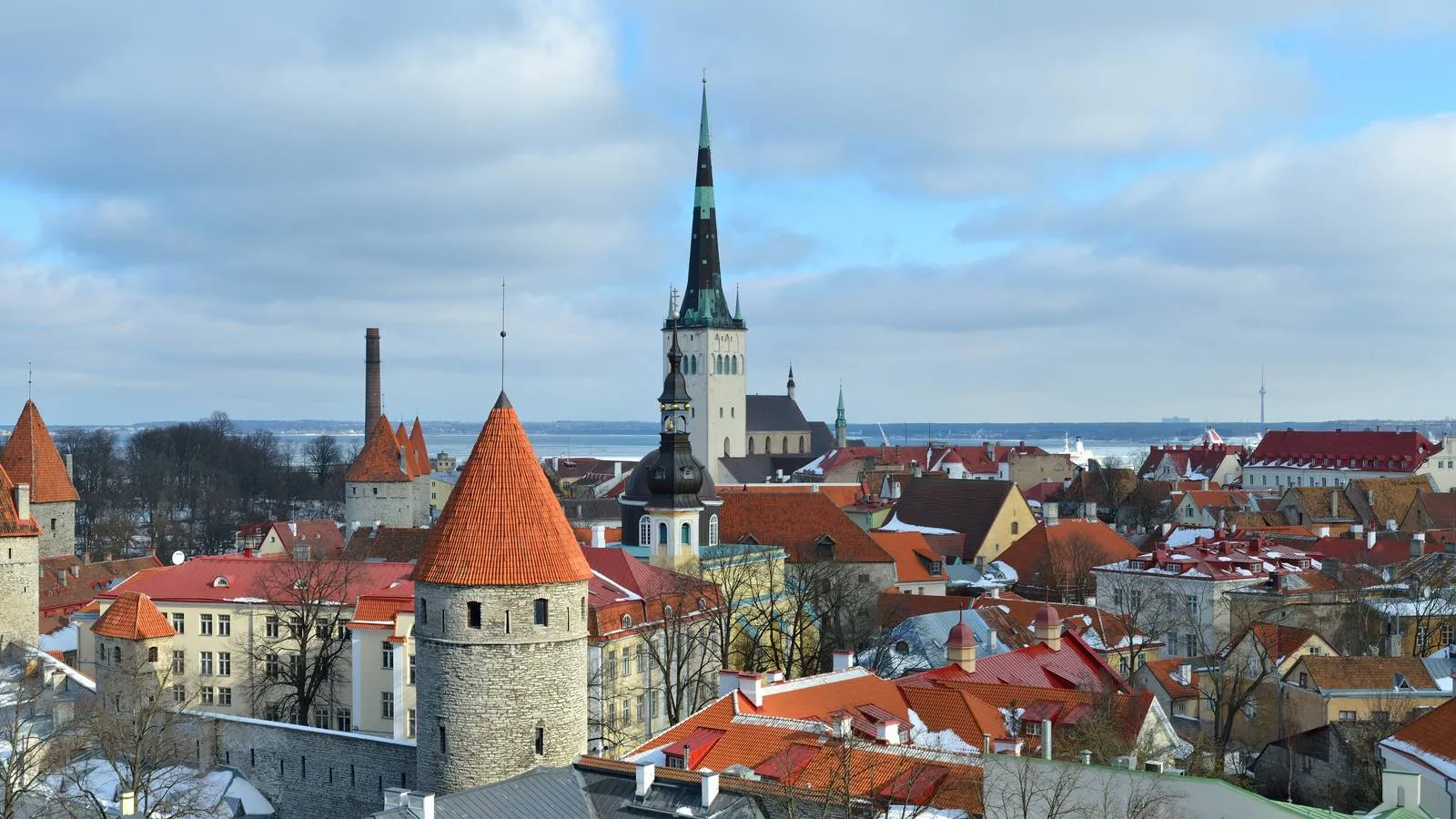
Cover photo: the old town of Tallinn in winter. Photo by Ivar Leidus, Wikimedia Commons, CC BY-SA 3.0 EE, cropped.